Do you believe in fate? Or maybe you prefer to look for ‘Godincidences’?
Last weekend we visited two homes where a certain Victorian architect once lived and whose novels are enough to make anyone wonder if there really is such a thing as bad luck.
As I wandered round the comfortably furnished rooms and gazed through windows onto lush lawns and dappled autumn trees, I tried to imagine why this talented and wealthy writer believed we all led such fateful lives.
Thomas Hardy was a Dorset lad and he was also an author I can’t help but admire.
‘Tess of the D’Urbervilles’ was one of the set books for my English A level and was the first in a long list of novels which I read one summer. I will never forget sobbing quietly in bed as the unfortunate heroine Tess, received yet another awful trick from the hand of fate for the umpteenth time. In my mind she was a victim, her tragic life steered down a road to destruction by a hidden force. But it wasn’t Tess who annoyed me, it was Hardy.
Some of the twists and turns of the plot left me shouting at him. As the letter slid under the mat at a crucial moment, or characters missed each other by a few hours, changing the whole course of their lives, it was hard not to feel frustration. How much bad luck can a girl have?
Last Sunday, stepping inside the little cottage where Hardy grew up, I took a step nearer to gaining an insight into what drove him to write brilliant, but largely unhappy novels. Apparently, it had a lot to do with his mother.
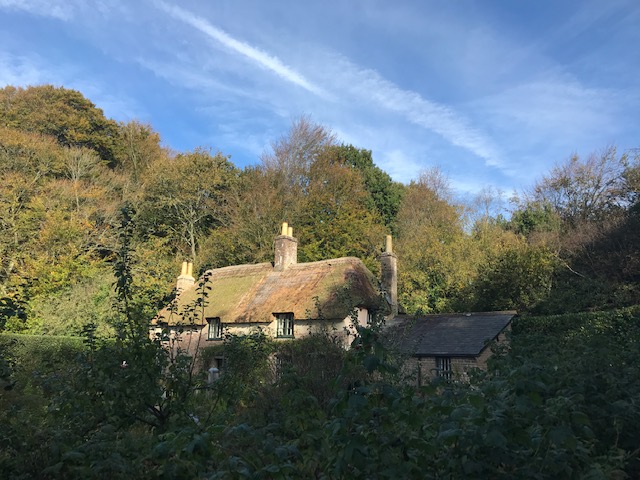
A National Trust guide inside the low beamed sitting room welcomed us in and offered to give us some background on the house and Thomas Hardy, if we were interested. “Yes please,” we said. There was no rush and so we settled down for what felt just like a ‘Jackanory’ session on chairs and stools around a roaring fire. What a great idea for a chilly autumn day.
The knowledgeable guide soon had us gripped. Pointing out photos of the whole family, including Hardy’s mother and father, sisters and brother, who had all lived at some points in the tiny three-bedroom thatched cottage. We found ourselves spellbound as the story of his life was unfolded, from childhood illness to moving to London and falling in love with a vicar’s daughter in Cornwall.
And here we go again – a chance meeting in a church where he was doing some work was how it all began. Sadly, this marriage didn’t fair well and his first wife turned very religious and let her cats eat off the dining table, finally becoming a recluse in the antic rooms at the end of her sad life. Hardy seems to have had a rough time with the women in his life. His mother, who from the photographs in the cottage looked positively frightening, forbid all her children to marry. Hardy was the only one brave enough to disobey her.
His second wife, Florence, who was a writer and also his secretary, might have brought more happiness into his life with her wide eyes and deep admiration for this famous author who was 40 years older. What promised to be a happier situation didn’t turn out so well, in the end. The separate bedrooms said it all – unless that was a Victorian thing. Hardy spent his last years writing streams of poetry, often looking back wistfully on his first marriage.
Wandering round Max Gate, the large home he designed and which his father and brother built on the edge of Dorchester, there was evidence of his friendships with other authors and academics and even a letter from Lawrence of Arabia lying on a dressing table.
The guide in Hardy’s childhood cottage described him as a bit of a misfit – he didn’t quite fit in. Although he had settled in Dorset, he highly valued all his influential London friends including politicians and aristocrats, but his health had prevented him from living in London.
Perhaps this was part of the reason why he wrote such a lot of sad stories? Or was it just that he observed that real life was tragic for many ordinary rural people at that time?
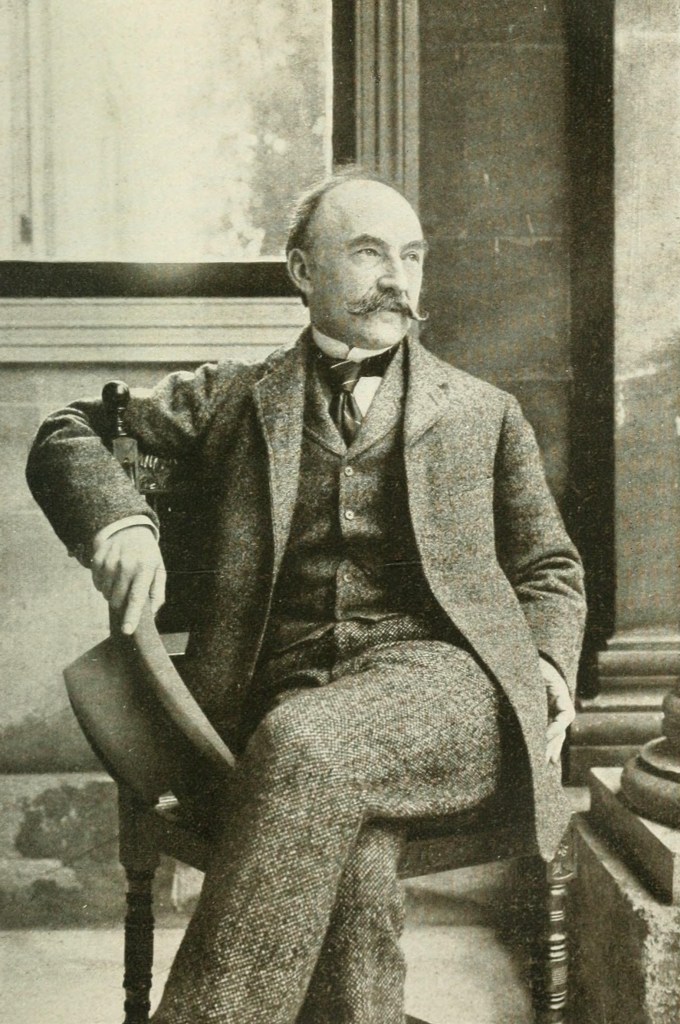
He was wealthy, with many resources at his disposal, as well as having the admiration of the public for his top selling books. When he died his estate was valued at around £100,000 the equivalent of £7million today. Even in death there was something not quite right as his ashes were interred in Poet’s Corner at Westminster Abbey, but his heart was buried, where he had requested to be laid, with his family in Dorset.
Apparently, Hardy was very uncomfortable with his first wife’s religious fanaticism. And yet he did like churches and went along to services at his local church. Before architecture he had even been thinking of a ‘career’ in the church. If he did believe in a supernatural power, it certainly wouldn’t have been a benevolent one.
I do believe in God and I suppose that’s the reason I don’t have much time for fate. In Hardy’s novels the characters never seem to have a choice – bad stuff just keeps happening and there’s nothing they can do. He writes as if we are all pawns in some Almighty game of chess. Perhaps that’s how he felt.
Is real life like that? And we will never know what might have been!
I don’t think so. We all have choices – sometimes we make good ones and other times they might not be so good. But we aren’t puppets dancing to a story that has already been written. We are our own authors and the next chapter is up to us.
 rachelfarmer