Runaway yacht

What would it be like to return to where you’d left your boat and realise it had disappeared? A little bit worse than losing your car in a car park, I think. One lucky set of sailors almost lost their boat the other night off the island of Capri. It turned out to be a busy night for us too…

We’ve been meandering up the Italian coast over the past week, discovering peaceful bays, anchoring beneath towering cliffs and swimming or paddling to explore the beaches, caves and coastal communities.

For two nights we anchored off Salerno, a historic town full of narrow streets with cafes and restaurants spilling out across even the narrowest alleyways. Up above were wrought iron balconies strung with colourful washing and festooned with various lights and elaborate decorations. It felt a very joyous city, pulsing with activity, especially at night.

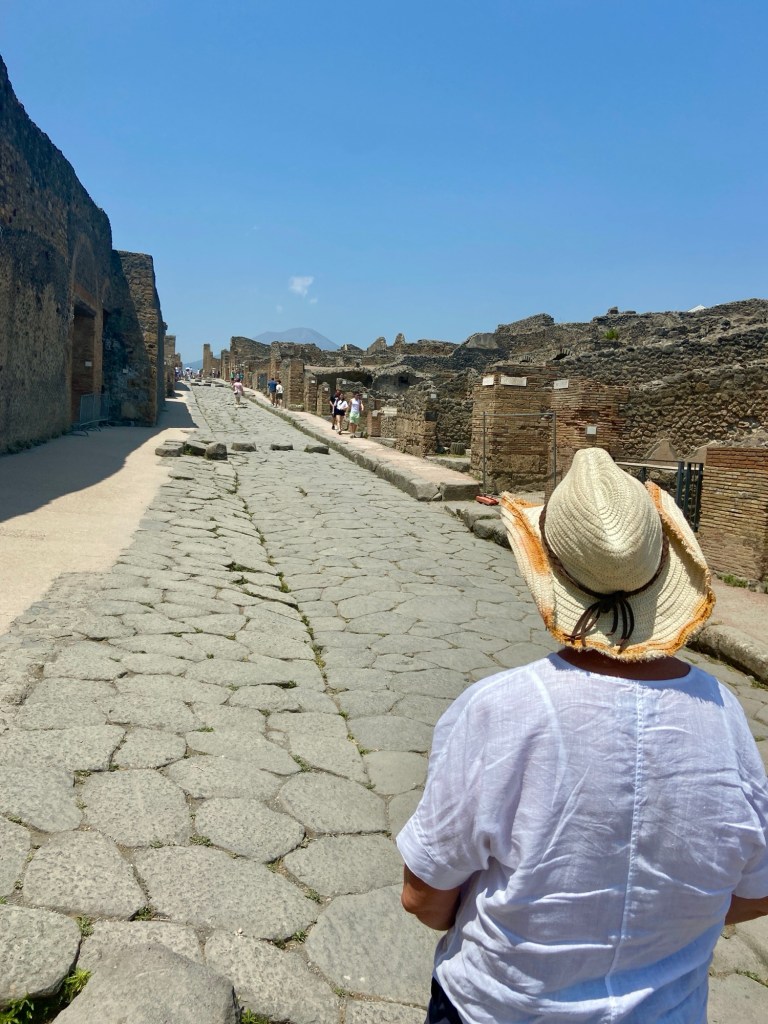
It was from here we took a bus to the ancient ruins of Pompeii – a place of sombre memorials and silent stories. There’s something eerie about walking on the huge cobble stoned streets, where some 2000 years ago people had shopped, traded, done their washing, cooked up meals, entertained guests, drank wine and dangled their fingers in the many pools and fountains of shaded courtyards. Some of the houses were poor and simple, but others gave us a snapshot of life for the wealthy, with vivid murals and deep red or green walls with the smoothest plaster and mosaic lined floors.
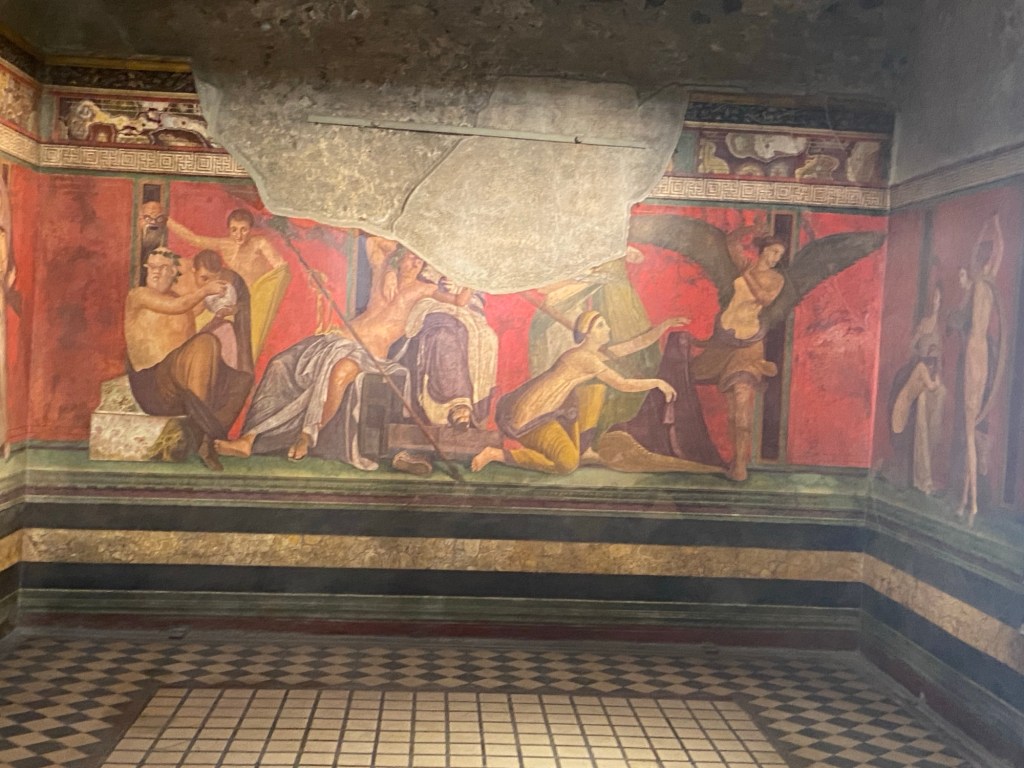
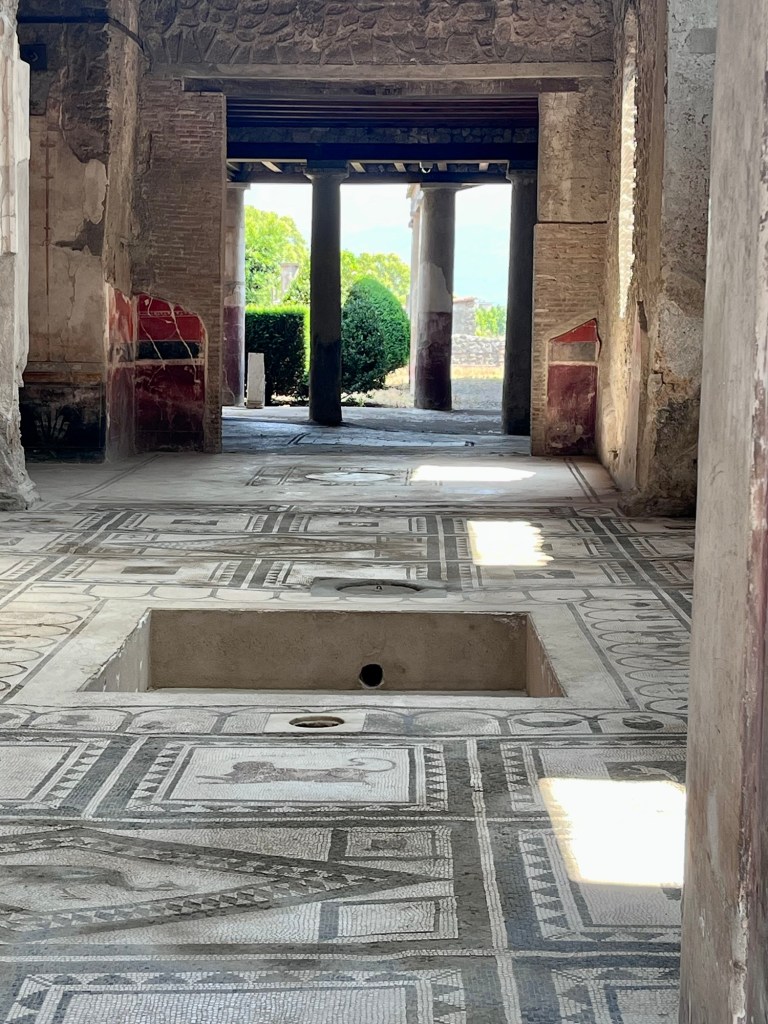
The heat was intense and there was so much to see. I had found a list of top 10 sites online, but switching between a photo of the map on my phone and trying to locate the top 10 ‘must sees’ in a shady spot without the sun’s reflection proved quite a task; meanwhile avoiding falling over the uneven pavings and cobbles of each area. If only we had picked up a paper map!
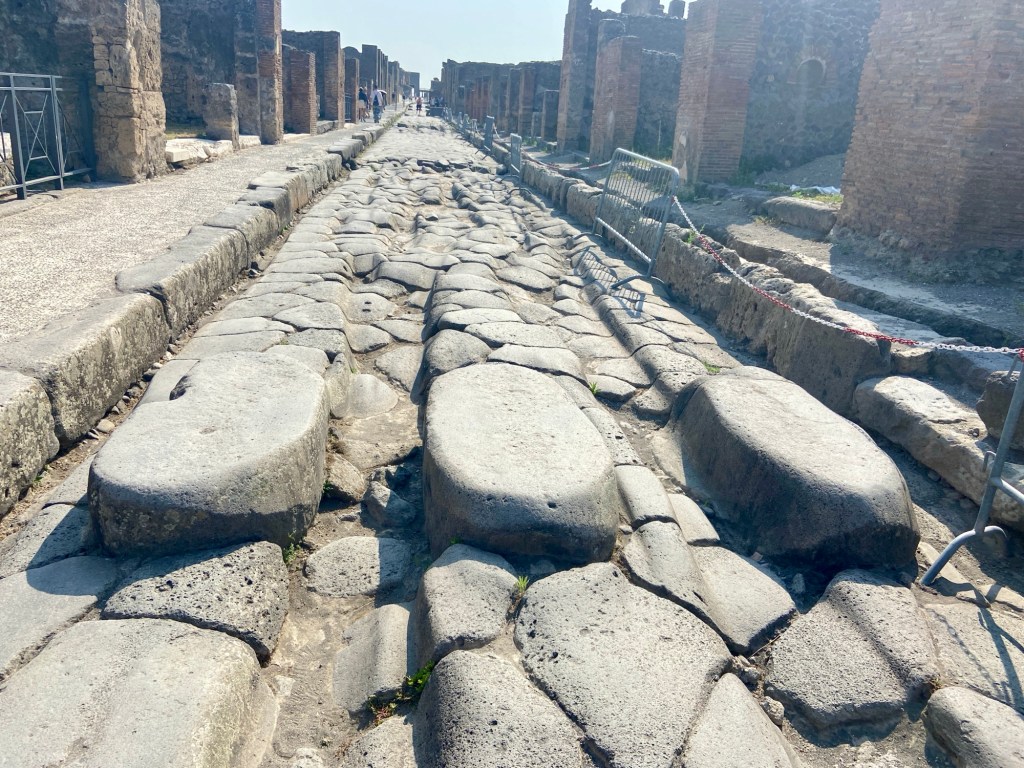
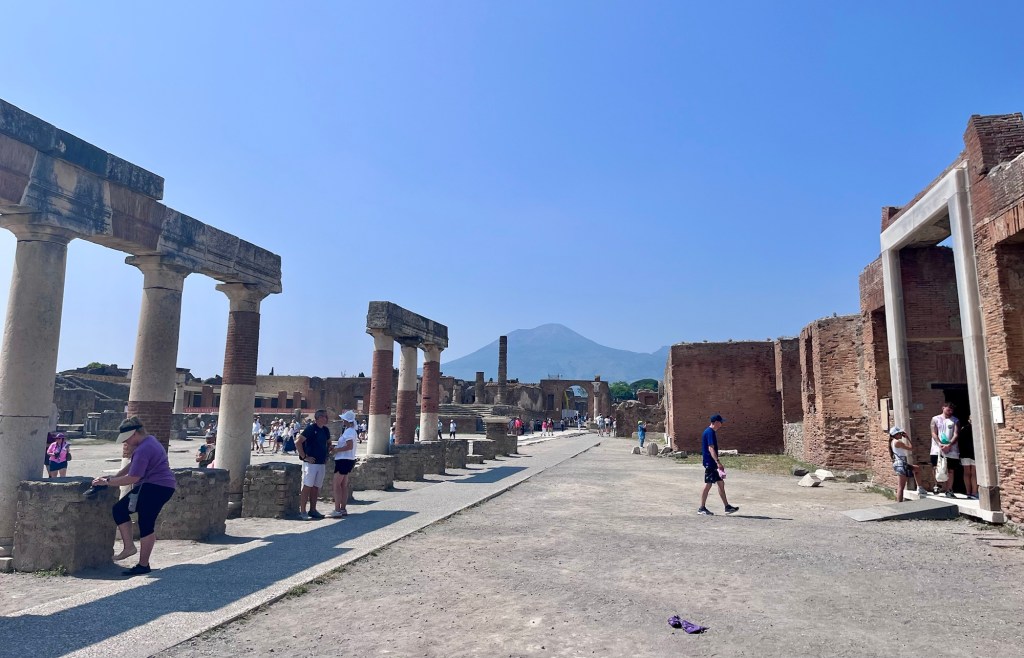
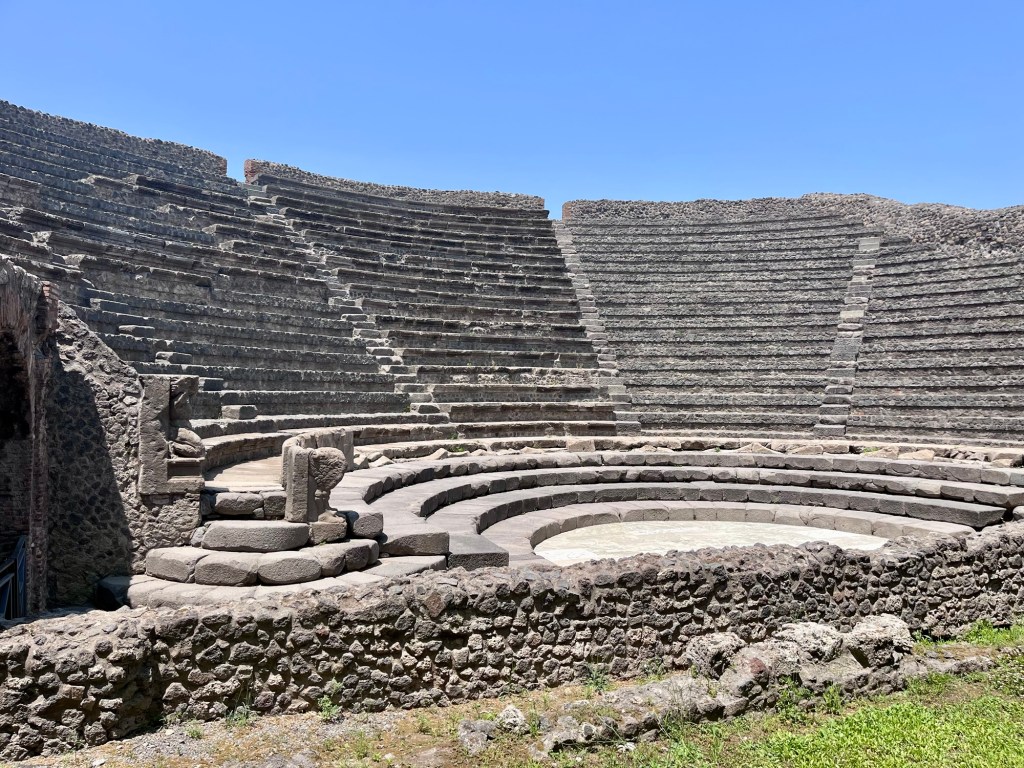
Pompeii feels vast – it involves a lot of walking; through the forum, the various amphitheatres – big and mini – the villas, and just street after street with similar names and Roman numerals that all began to merge. Unlike England’s meandering villages and historic towns, the remains of this ancient city was set out in regular blocks, which reminded me of New York.
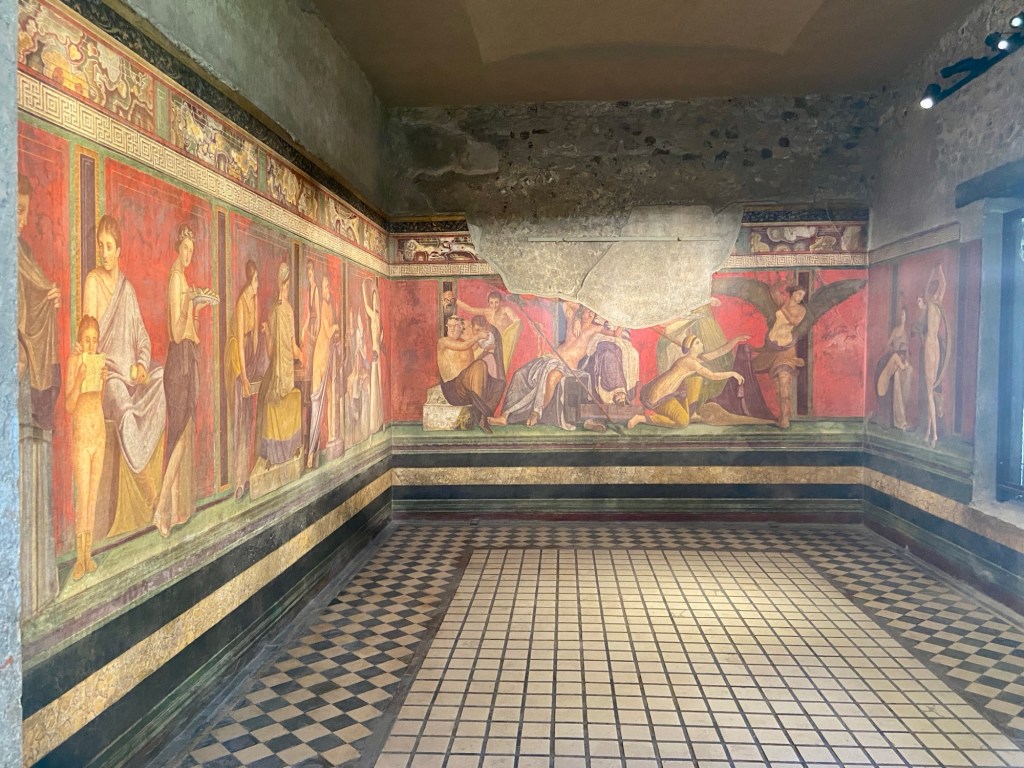
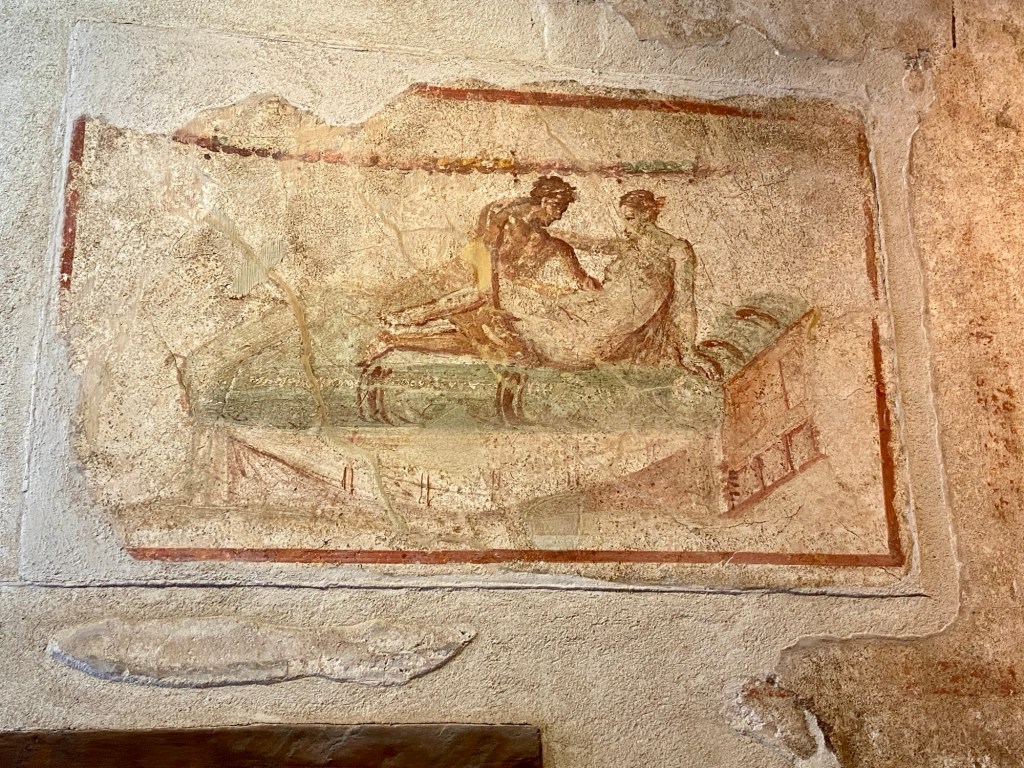
We were nearing the end of our visit and our stamina too, but there was one of the top 10 I still hadn’t spotted. The brothel had been ticked off earlier and most of the others, but not the “house of the fugitives” – well that’s what I was calling it. I really rather wanted to see it and as we weren’t planning on coming back anytime soon, it had to be done.

So, even though it was on the opposite end of the site, as the heat of the afternoon faded we set off and eventually found the place.
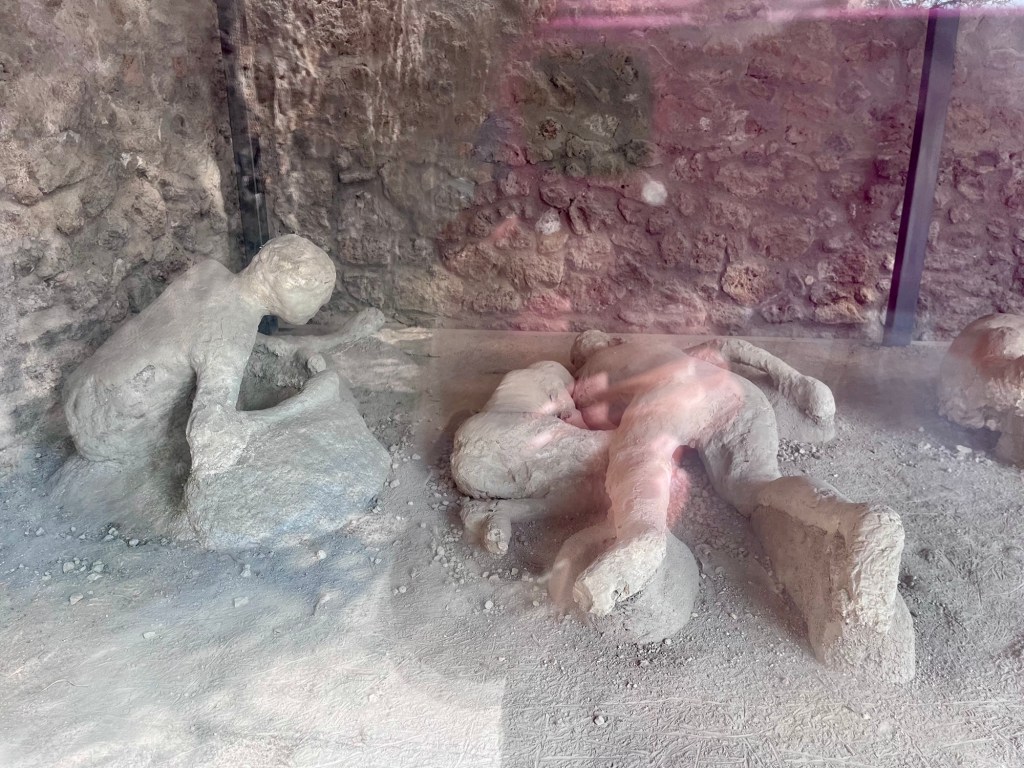
It is shocking to see the detailed forms of people from so long ago, some in full flight, others hunched over, another covering their eyes.
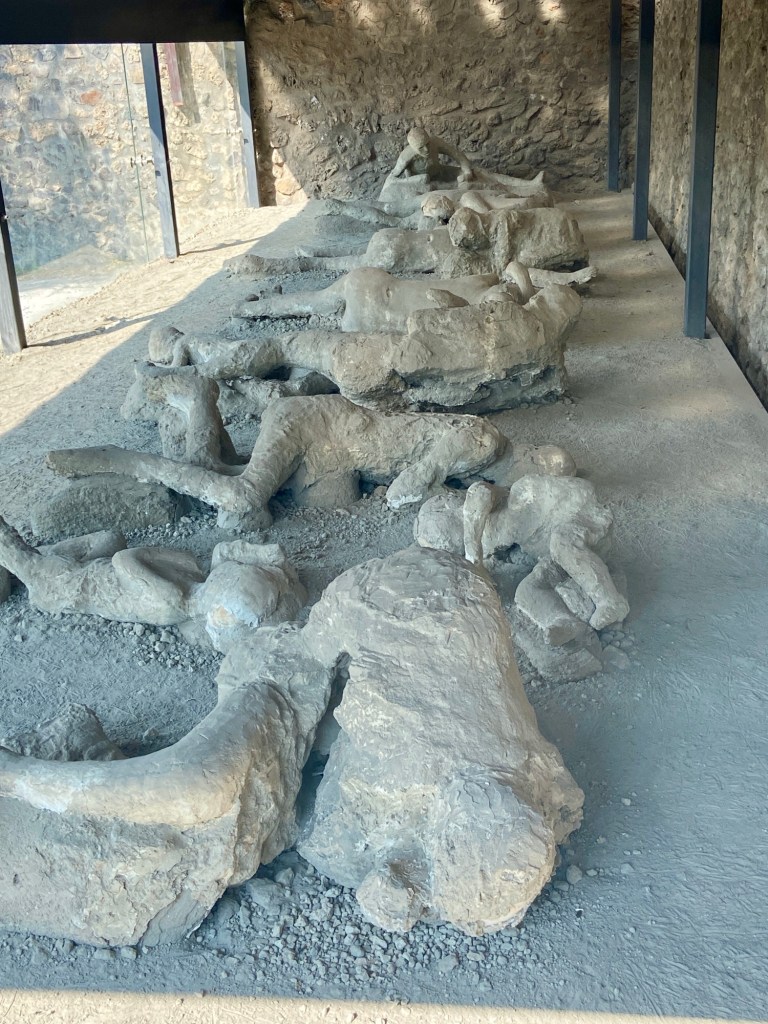
This was the human face of the destruction of Pompeii. Never mind ruined buildings, here was an actual family running for their lives, small children among them. It made me think of all the innocents caught up in war and tragedy right now. Each life is precious. It was 2000 years ago and it is now.
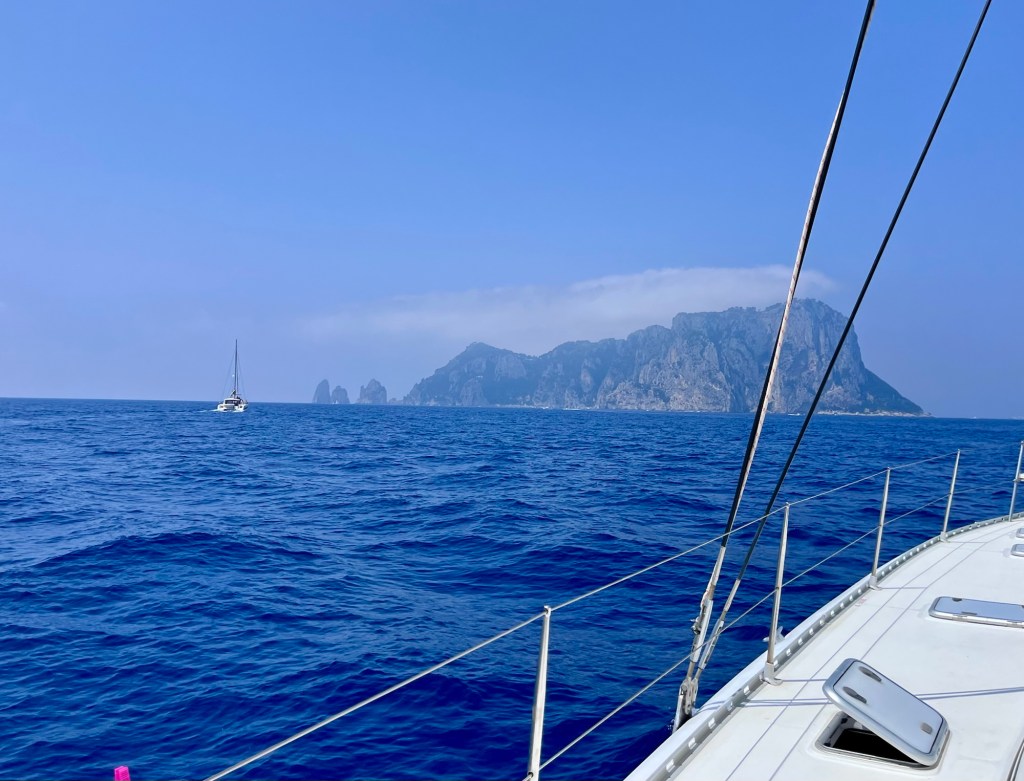
Capri was our next island stop and we’d heard mixed reviews about staying there from a sailing perspective. We anchored quite securely, we thought, in front of a little beach and after a trip to the beach and the town, we settled in for the evening.
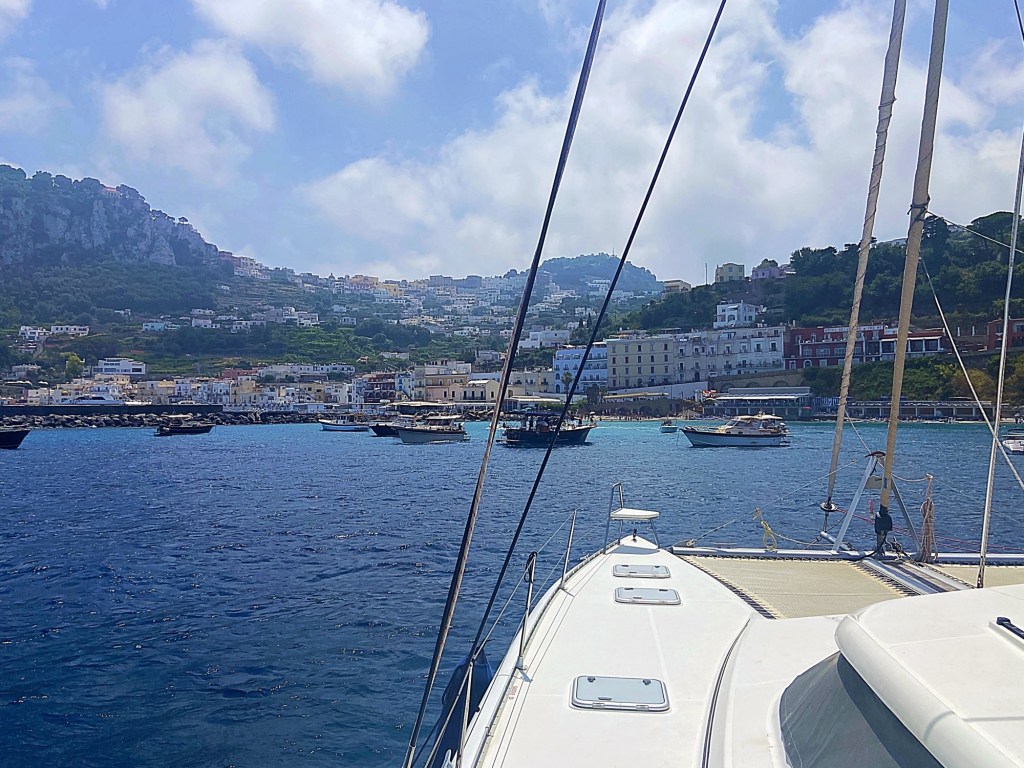
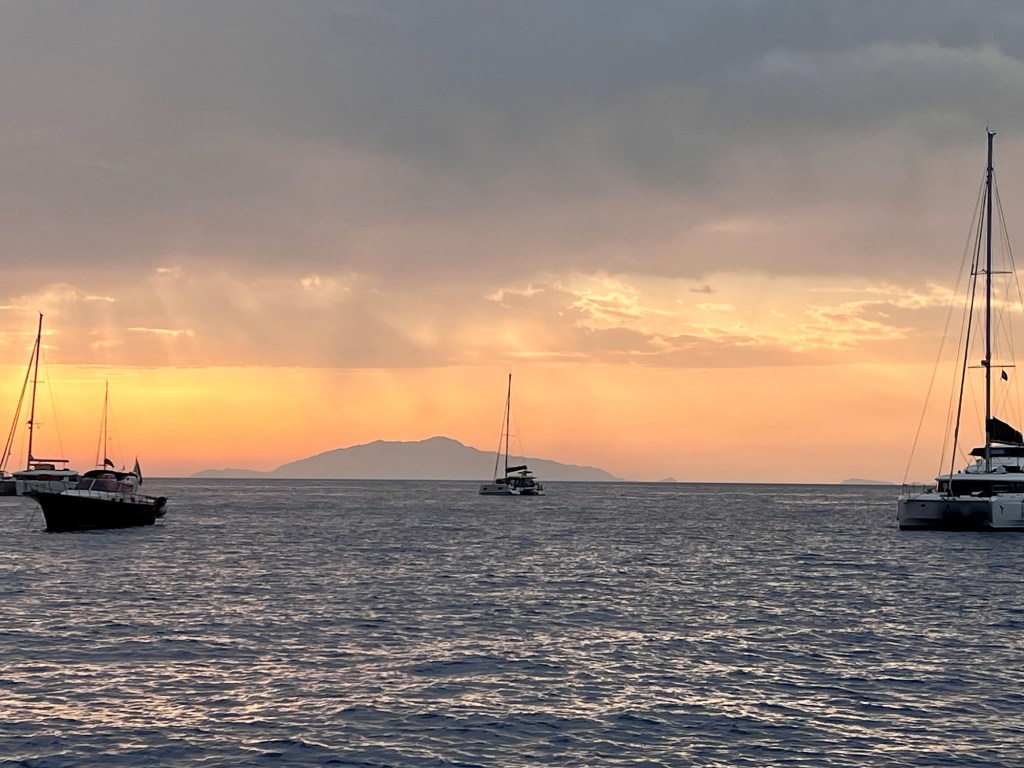
The wind was strengthening and the swell increasing as we watched the arrival and departure of various boats around us. Suddenly, we noticed a yacht that had been beside us start moving backwards, but there was no one onboard and their anchor was still down. It came within an arms length of us, but we couldn’t reach it or do much as it continued to drift. We called out a warning to the next yacht it was heading towards, which it also narrowly missed. The 40 foot boat was still heading out to sea and we wondered where the owners were. Some minutes later a powerful rib boat launched out from a nearby catamaran and managed to secure the wandering yacht to their boat.
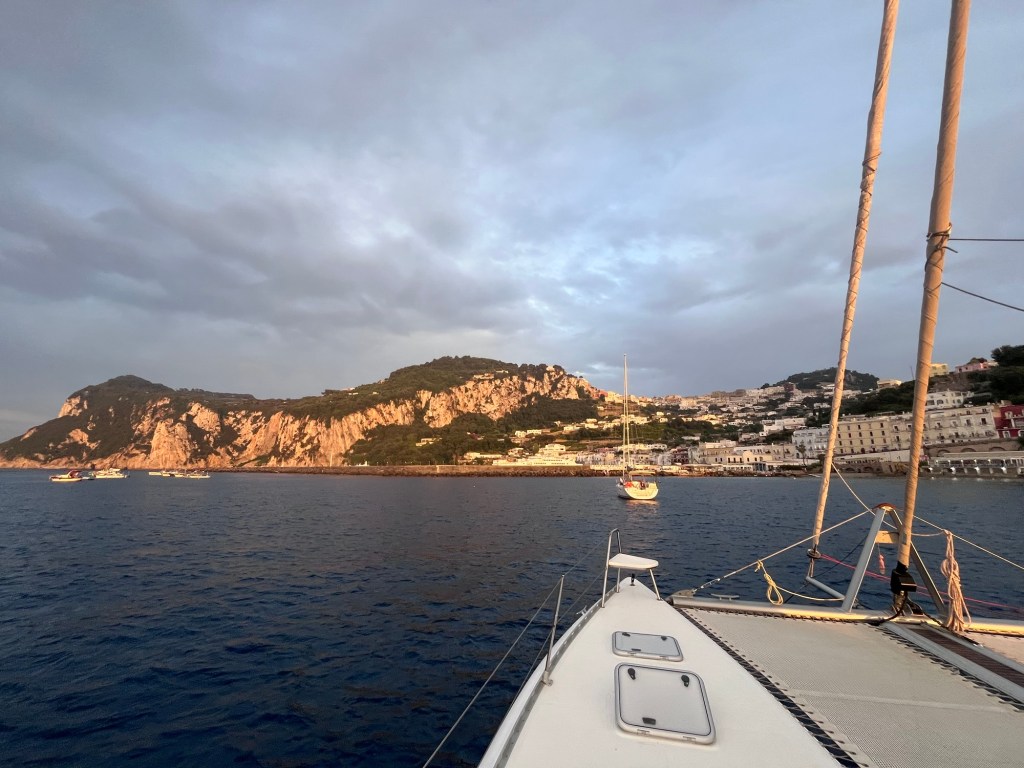
In the midst of this we had begun to drop more chain to make ourselves more secure in the increasing wind and waves. But we, along with other yachts, found we were also sliding backwards. It was getting dark by the time we were anchored again in time to see the runaway yacht reunited with its owners and re-anchored safely a few metres away. There were also ‘thank you goodies’ delivered to the rescue crew, who had saved their bacon! All’s well that ends well!
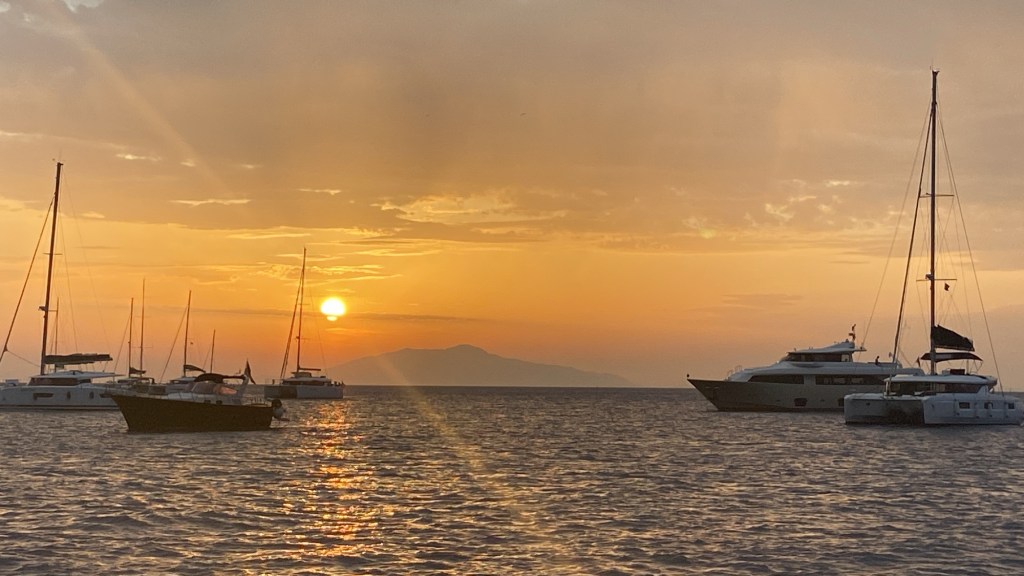
That was quite enough drama for one evening. The runaway yacht was a salutary reminder of what can happen when you leave your boat at anchor and head for the shore.
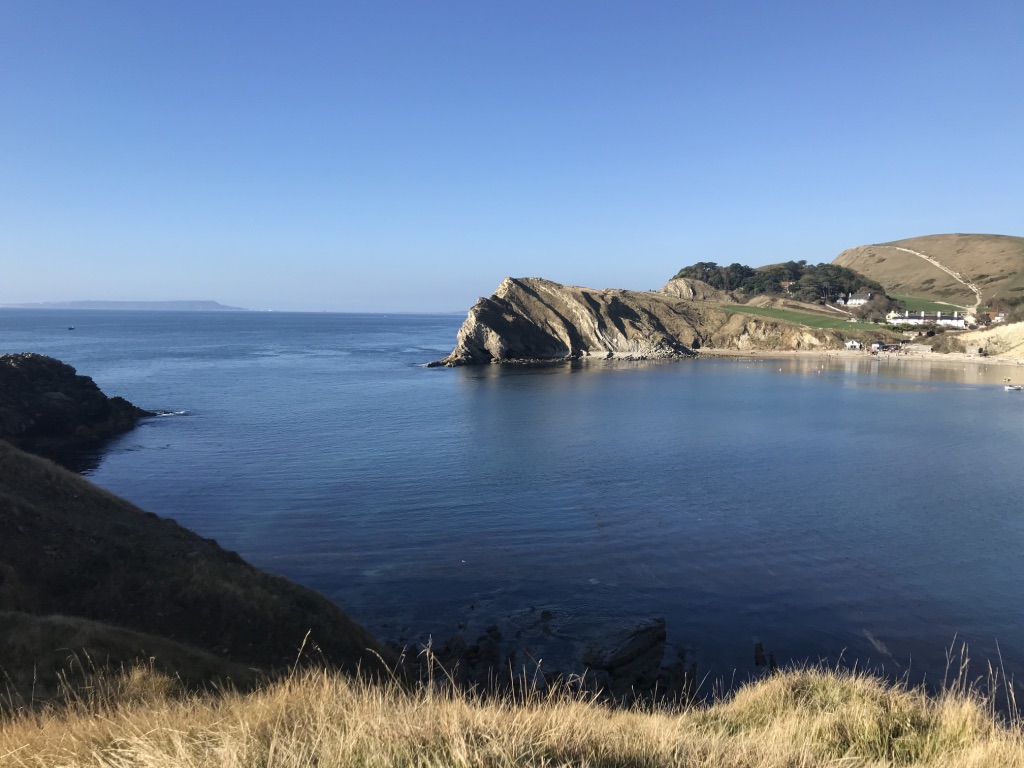
Blue skies and unexploded bombs

It’s not the noise of gunfire I’m bothered about, it’s the unexploded bombs …

Our new home at Lulworth Camp in Dorset has been full of surprises. There’s the occasional rattle of gunfire, but with a sea view from almost every window, I’m not complaining. I’ve also nabbed the room with the best view as my study – so no excuse about lack of inspiration for writing.

UNADJUSTEDNONRAW_thumb_194aThe night before we moved in we enjoyed a stay in a local hotel overlooking Lulworth Cove. It was a real treat. We were even upgraded and that never happens to me. The suite had its own colour coordinated settee and tea and proper coffee and an enormous bed. The trouble is moving house and all the excitement didn’t equal a peaceful night’s sleep… At 4am we were discussing a nightmare about a crab (something to do with what we’d eaten apparently), when I was unnerved by something and let out a bit of a scream. Moments later there was a knock on the door asking us to, “keep it down in there.” One of us shouted that we were all right, convinced they would think there was a murder happening. Breakfast was a little awkward. Moving scrambled egg around the plates, we wondered which of the other couples had banged on our door and did they know we were ‘the screamers’?
We’re in Thomas Hardy country now, so exploring should be done on foot, or at least by bicycle. The local ordinance survey map shows footpaths galore, with one small hitch; many of the paths crisscross the army ranges that surround us and live firing means they’re only open at weekends and during school holidays.

After the hazy days of unpacking boxes, painting rooms (because you can only take so much magnolia) and finding our way to a supermarket – the first free weekend arrived bright and sunny. Although the garage sort out was beckoning, we turned our back on it and joined two energetic members of the family pedalling east in search of a forgotten village and an almost deserted beach.

The long climb up Tyneham Hill made me dream of an electric bike, but the view from the top and the sausage sandwiches helped. It seemed strange to be cycling through a firing range where cows and sheep grazed in amongst rusted out tanks. There was really very little to show that this was army territory apart from some large florescent numbers that stood out from the gorse on the hillside.

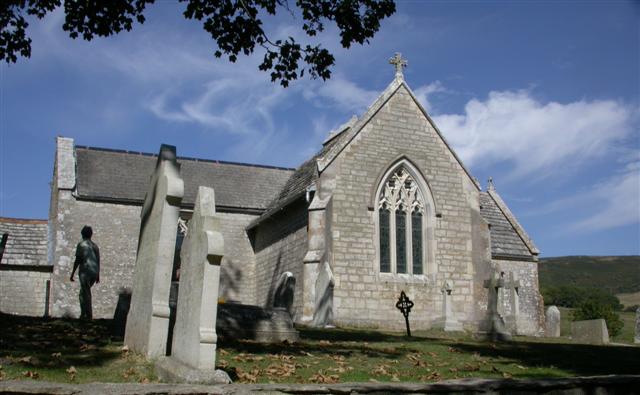
The next surprise was Tyneham village – a place that time forgot. The deserted village is only accessible when the firing ranges are open and lies just up from the sea, nestled in a valley at the foot of a fantastic freewheeling hill. The cluster of stone buildings includes a church, a school, some tumbled down cottages and the remains of a vicarage. When we arrived there were small groups of people wandering between the buildings, but unlike many tourist spots, a hush had descended. People spoke in muted voices as if, Doctor Who-like, we had travelled back in time to the 1940s when the village folk had moved out to allow the army to prepare for D-Day.

Tyneham_Church_-_geograph.org.uk_-_1889

Tyneham Church by Ben Gamble  www.geograph.org.uk 

The story of Tyneham deserves a dedicated blog and I’ve vowed to return for longer next time and soak up that palpable history from the beautifully preserved schoolroom to the church with its colourful tiles and walls lined with photographs from the past. A remembrance service is held there each year, which must be very poignant. Part of the sign left on the church door by parishioners in 1943 read: “…We have given up our homes to help win the war to keep men free. We will return one day thank you for treating the village kindly.” Sadly, they never returned.

After a tough cycle, for some of us, and an exceptionally hot day for October, we were looking forward to a dip in the sea. There was a slight hitch as no-one had brought a bike lock and a zealous ranger told us we couldn’t even push our bikes on the range path to the beach. Undeterred we hid the bikes in some bushes and hoped for the best.

Warbarrow Bay emerged around the corner glistening in the sunshine and we all stripped off and plunged into the very cold crystal clear water. Five minutes was long enough for me to say I’d had a swim to the anchored boat and back. It was amazing to think we were swimming in the bay we could see from our house.

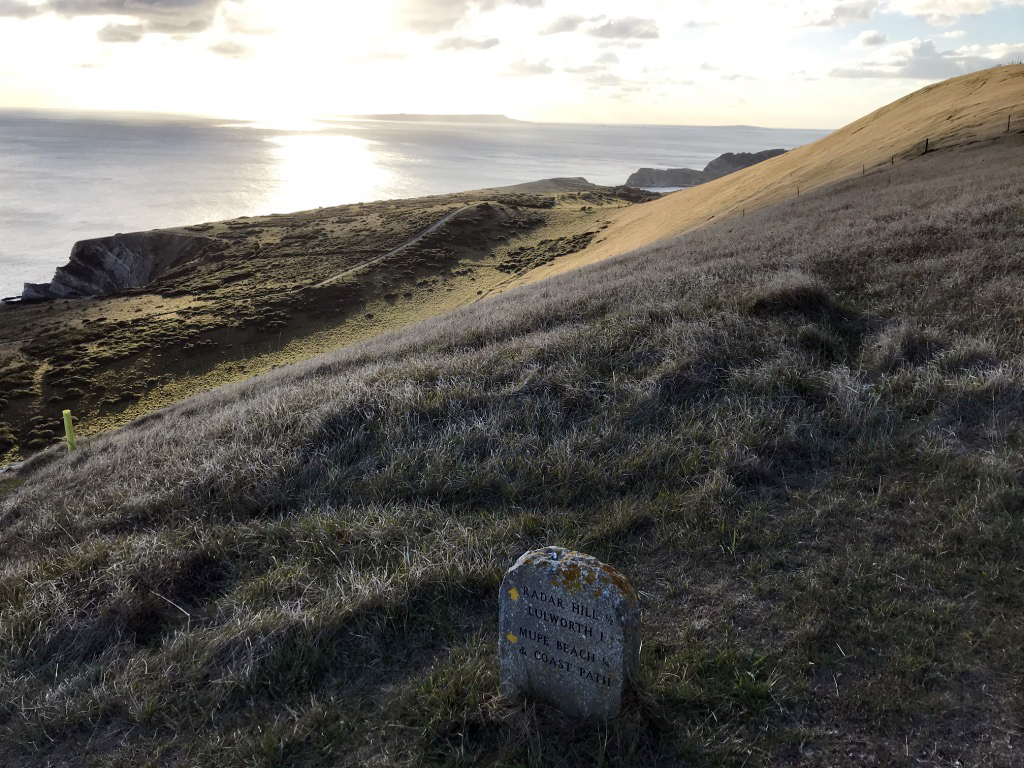
The next weekend wasn’t quite as warm, but we decided to explore the other end of the bay on the range walks and battled our way up a very steep hillside on the cliffs, while a sharp northerly wind made me pull my woolly hat down over my ears.

We spotted a sign warning us to keep off the barb wired beach due to unexploded shells, which we dutifully obeyed. Further up the cliff the path broadened out and with no-one about one of us decided it was safe to venture off the path a few metres into some shrubbery to… you know, call of nature. It turned out this was a bad idea. Catching up with me a few minutes later I heard how he’d spooked himself after kicking over a piece of metal, only to read the words: ‘Danger unexploded shells – keep out’. At which point he looked around and spotted dozens of pieces of metal poking out from the undergrowth in all directions.

Oops!

Lesson 1: Use the facilities before you venture out on the ranges. Unexploded anythings deserve respect.

cliff walk lulworth

Borderland shopping

I never used to take my passport when I went shopping, but then I’ve never lived in Cyprus before. Now my well stamped border paper and passport are an essential part of a trip to the city. That’s because shopping in the country’s capital is a peculiar experience.
Yesterday I strolled down Nicosia’s Ledra Street with a couple of family members, we past some familiar names like Debenhams, Peacocks and Starbucks and could have been walking through any European city centre. The several storey buildings loomed above us and cafe tables and A-frame blackboards with enticing offers spilled onto the pavement. But after a few minutes the shop fronts disappeared and we were wandering past a bare section of walls and barricaded fencing before we found ourselves in a queue at a customs kiosk. Our passports were examined and stamped and we continued on down the street into another world of shops and stalls, slightly scruffier this time, but also spilling onto the pavement with an array of goods, where new scents and sounds were on offer. It was a little like walking through the wardrobe into Narnia, but without the fur coats. The currency had changed to Turkish Lira within a few metres, yet it was the same street and the same city. This other side of the city looked poorer though and more run down, there were less high rise buildings and many more crumbling sections of concrete and simple shops selling anything from fake designer T-shirts and handbags to rolls of material and chunky baskets.
Stopping to admire some tablecloths, a stall-holder and his son began to chat to us.
“So you’re staying on the rich side and visiting the poor side are you?”
We felt a bit embarrassed by this and I promised to return another day, when I had room and time to buy a basket and a tablecloth. They pointed out the barricade at the end of a side street and shook their heads, “We’re not Turkey, we’re one Cyprus…it’s one country. We’re Cypriot”, they explained. Winding our way through the narrow streets of shops I knew what I was heading for, but which streets led there was another matter.
inn
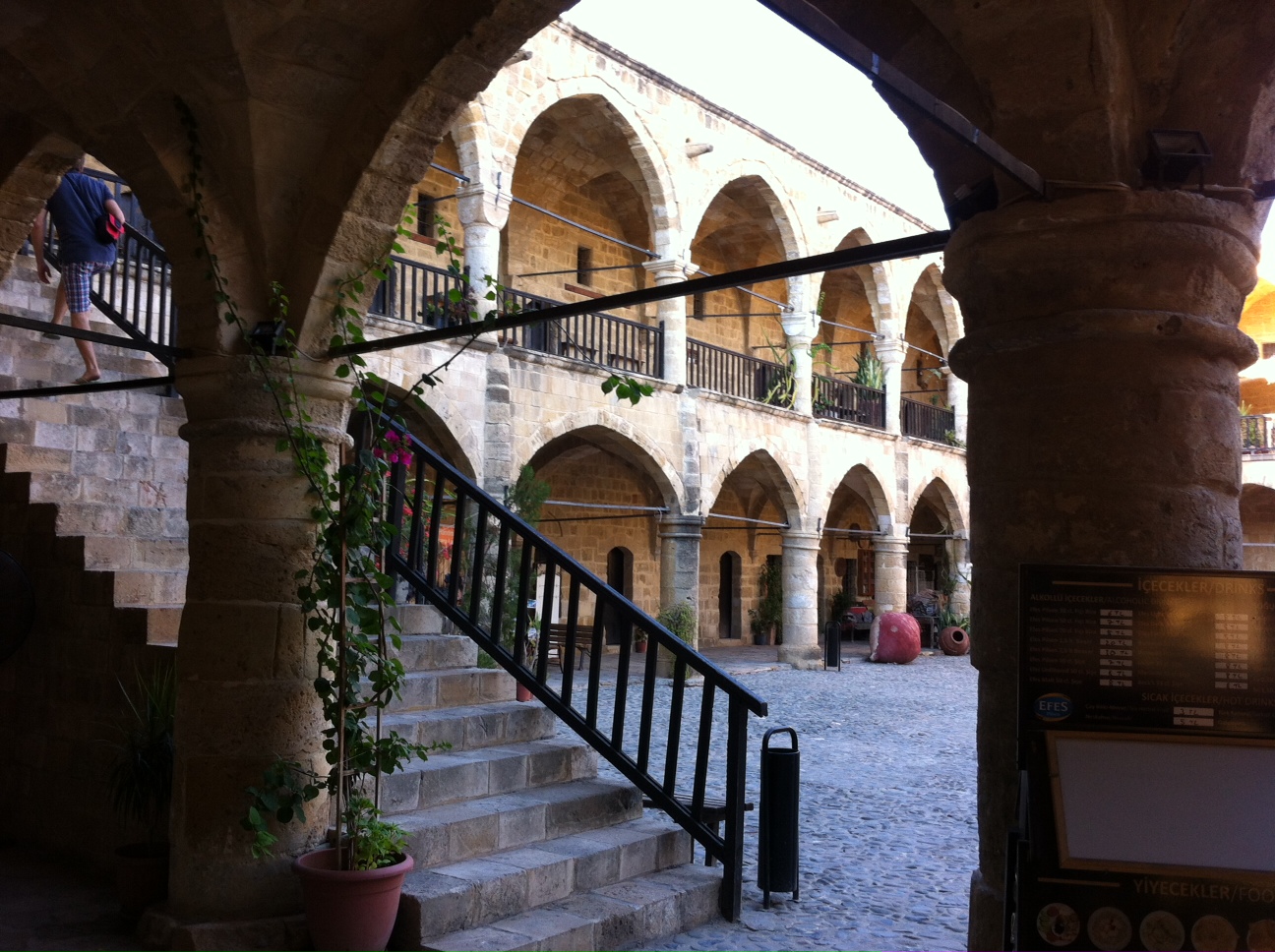
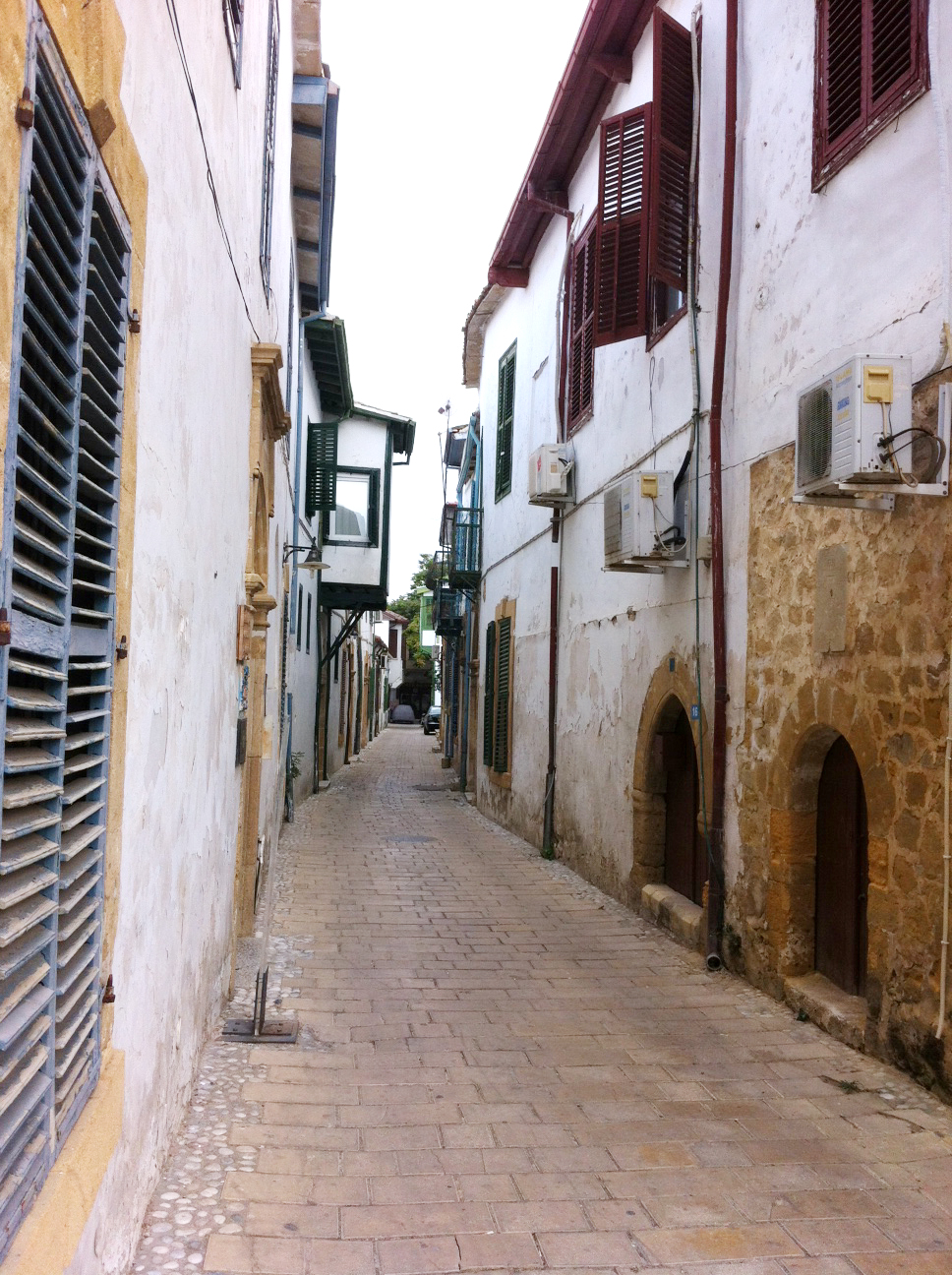
After taking a circuitous route we eventually found the ‘Buyuk Han’ or Great Inn which dates back to the 1500s. Walking in through the archway we found ourselves in a walled courtyard lined with arches in a soft sandstone. In the middle was a domed hexagon shaped building, also with arches at its base. Round the corner wide steps led to the upper floor, which looked down on the courtyard, with rooms leading off, where travellers, and I imagine crusaders, would have stayed, leaving their animals to rest down below. Now the rooms are filled with artists and craftspeople, selling anything from painted glassware to jewellery and sculpture. It hasn’t lost its atmosphere though and sitting at the cafe tables below you could imagine being transported back to the days of Robin Hood and Richard the Lionheart, with camels and horses appearing in a ball of dust through the archway. In fact, this place wouldn’t have been there in that era…but why let the facts get in the way of my imagination?

Nicosia is filled with history and culture and I was keen to show off some of the bits I could remember from a fleeting visit a few weeks earlier. But I’m not the best with directions and maps and unfortunately my sister is no better! Still, we found ourselves at the ancient Cathedral of St Sophia, now a mosque. The massive gothic building had been carpeted throughout, two minarets tower above the arched windows and many of the carvings and statues have been chipped away to remove the Christian symbols. But it couldn’t take away the similarities with many gothic English Cathedrals. Carvings of leaves still adorned the door arches and curled themselves around pillars at the entrance, but it wasn’t quite Southwell Minster. I slipped off my shoes, wound a scarf round my shoulders and head and stepped inside. It was strange to feel the carpet on my bare feet and look up at the vaulted roof and massive pillars – Richard the Lionheart had been crowned King of Cyprus right here. If these walls and pillars could speak, what would they tell me?

We were keen to see some more of the history and walk along the massive Venetian built city walls, so after pouring over a map and turning it round a few times to see if that helped, we headed off in what we thought was the right direction. One of the party was sighing frequently and looking over his shoulder as the streets became more and more empty and the houses increasingly dilapidated. “Where are we going?” was the question…we were heading for the city walls of course, patience was required. More twists and turns and the only people we saw were children peering from behind half open doorways. A shrill whistle just beside us made everyone jump and we peered round to see a clutch of small children giggling at us from behind a parked truck. I think they knew something. Sometime later and no wall in sight we gave up on the map reading and wound our way back in the direction of the minarets, through more deserted alleyways and streets and even a motorbike graveyard hidden behind a corrugated fence. A collective sigh of relief was breathed when shops appeared and other people were walking past us! The wall was also eventually found, after we asked for directions (who does that?). Below the huge Venetian built walls we looked down into the massive moat which runs right round the city and part of which hosts a shared football pitch in the middle of no-man’s land, where young people from both sides can play. No matches were on today. Looking across the vast dried out moat between the walls we could see the UN headquarters, with its flag fluttering on top, in a former hotel that had seen much better days.
photo 2 photo 1
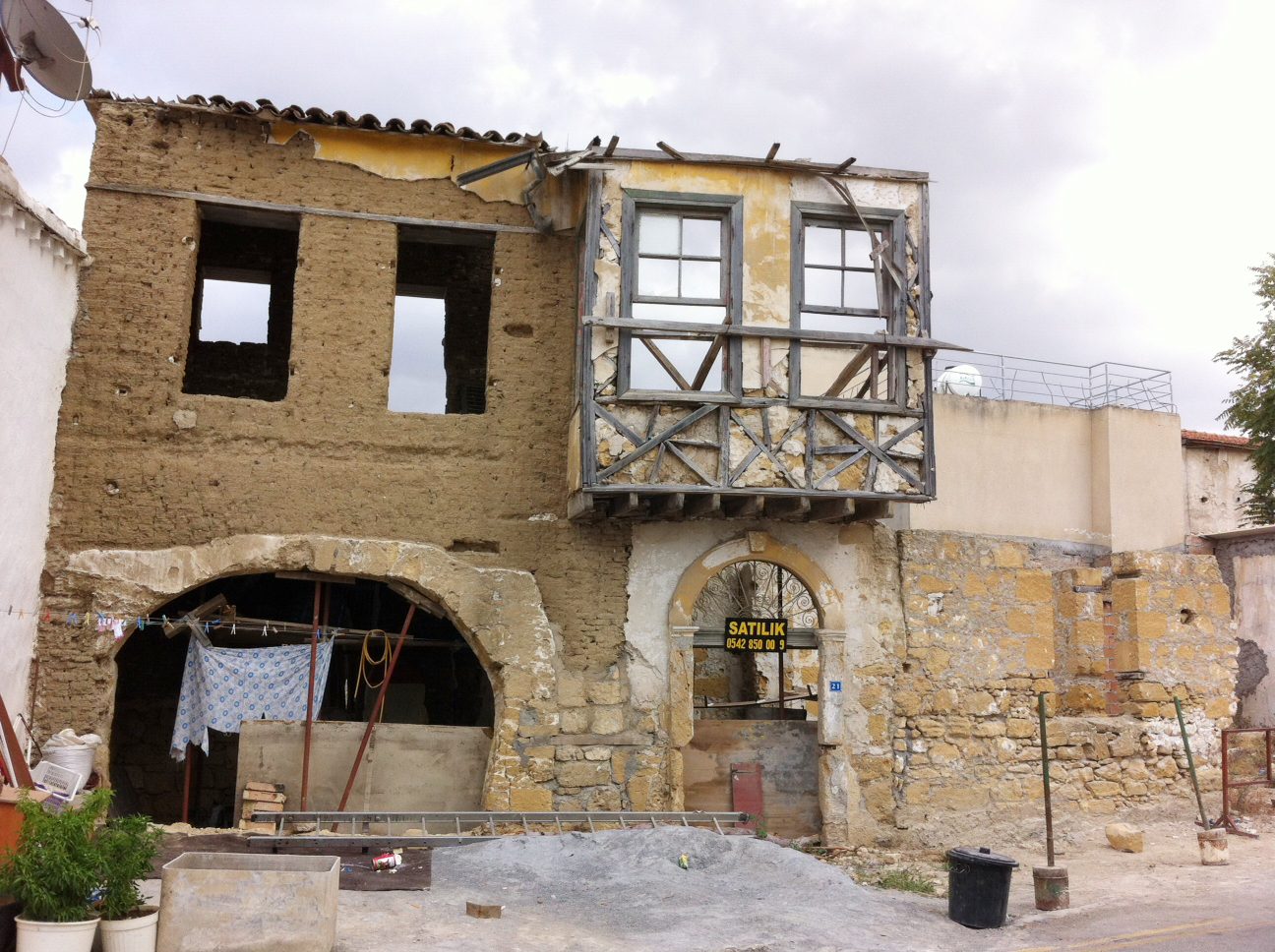
Finding our way back to the border crossing involved tackling another maze of streets that frequently led us to dead ends and barriers with a red sign of a soldier with a gun and a camera crossed out marked as a ‘forbidden zone’. As we skirted the buffer between north and south, the buildings became more and more derelict, some with war damage and many crumbling through neglect. Later, after we eventually crossed the border from one shopping street into another, we paused to look at the narrow gap between the buildings in no-man’s land. This little stretch of land, barely 10 feet wide, where several storey buildings towered above us, is called ‘Spear Alley’ after an incident where a soldier was killed by one from the opposite side simply leaning across with his weapon and running him through with his bayonet. Apparently at one time bayonets were strapped to broom sticks and there was jousting across the alley from the balconies above. This area of the city is called ‘the Green line’ and is a constant reminder, to all those who cross, of the deep divisions that remain. A few steps from Spear Alley as the first European shops emerged there was a bench and plastered into the wall above it a tile which read: PEACE. We sat there for a moment and wondered how long before that will become a reality for the Cypriots living on both sides of the line. I wasn’t in the mood for shopping anymore.