Who is writing your story?

Do you believe in fate? Or maybe you prefer to look for ‘Godincidences’?

Last weekend we visited two homes where a certain Victorian architect once lived and whose novels are enough to make anyone wonder if there really is such a thing as bad luck.

As I wandered round the comfortably furnished rooms and gazed through windows onto lush lawns and dappled autumn trees, I tried to imagine why this talented and wealthy writer believed we all led such fateful lives.

Thomas Hardy was a Dorset lad and he was also an author I can’t help but admire.

‘Tess of the D’Urbervilles’ was one of the set books for my English A level and was the first in a long list of novels which I read one summer. I will never forget sobbing quietly in bed as the unfortunate heroine Tess, received yet another awful trick from the hand of fate for the umpteenth time. In my mind she was a victim, her tragic life steered down a road to destruction by a hidden force. But it wasn’t Tess who annoyed me, it was Hardy.

Some of the twists and turns of the plot left me shouting at him. As the letter slid under the mat at a crucial moment, or characters missed each other by a few hours, changing the whole course of their lives, it was hard not to feel frustration. How much bad luck can a girl have?

Last Sunday, stepping inside the little cottage where Hardy grew up, I took a step nearer to gaining an insight into what drove him to write brilliant, but largely unhappy novels. Apparently, it had a lot to do with his mother.
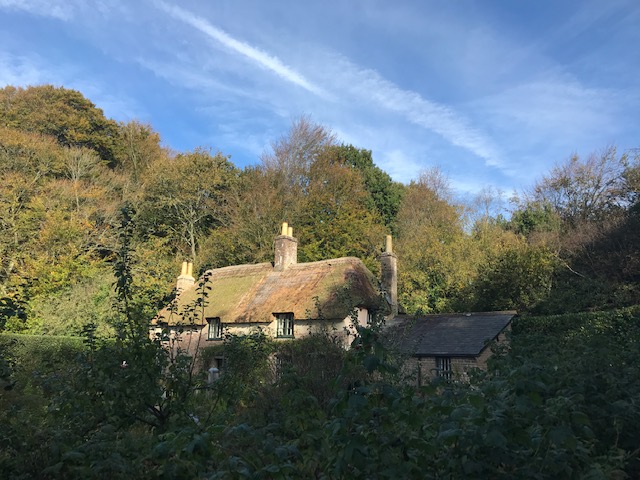
National Trust guide inside the low beamed sitting room welcomed us in and offered to give us some background on the house and Thomas Hardy, if we were interested. “Yes please,” we said. There was no rush and so we settled down for what felt just like a ‘Jackanory’ session on chairs and stools around a roaring fire. What a great idea for a chilly autumn day.

The knowledgeable guide soon had us gripped. Pointing out photos of the whole family, including Hardy’s mother and father, sisters and brother, who had all lived at some points in the tiny three-bedroom thatched cottage. We found ourselves spellbound as the story of his life was unfolded, from childhood illness to moving to London and falling in love with a vicar’s daughter in Cornwall.

And here we go again – a chance meeting in a church where he was doing some work was how it all began. Sadly, this marriage didn’t fair well and his first wife turned very religious and let her cats eat off the dining table, finally becoming a recluse in the antic rooms at the end of her sad life. Hardy seems to have had a rough time with the women in his life. His mother, who from the photographs in the cottage looked positively frightening, forbid all her children to marry. Hardy was the only one brave enough to disobey her.

His second wife, Florence, who was a writer and also his secretary, might have brought more happiness into his life with her wide eyes and deep admiration for this famous author who was 40 years older. What promised to be a happier situation didn’t turn out so well, in the end. The separate bedrooms said it all – unless that was a Victorian thing. Hardy spent his last years writing streams of poetry, often looking back wistfully on his first marriage.

Wandering round Max Gate, the large home he designed and which his father and brother built on the edge of Dorchester, there was evidence of his friendships with other authors and academics and even a letter from Lawrence of Arabia lying on a dressing table. 

The guide in Hardy’s childhood cottage described him as a bit of a misfit – he didn’t quite fit in. Although he had settled in Dorset, he highly valued all his influential London friends including politicians and aristocrats, but his health had prevented him from living in London. 

Perhaps this was part of the reason why he wrote such a lot of sad stories? Or was it just that he observed that real life was tragic for many ordinary rural people at that time? 
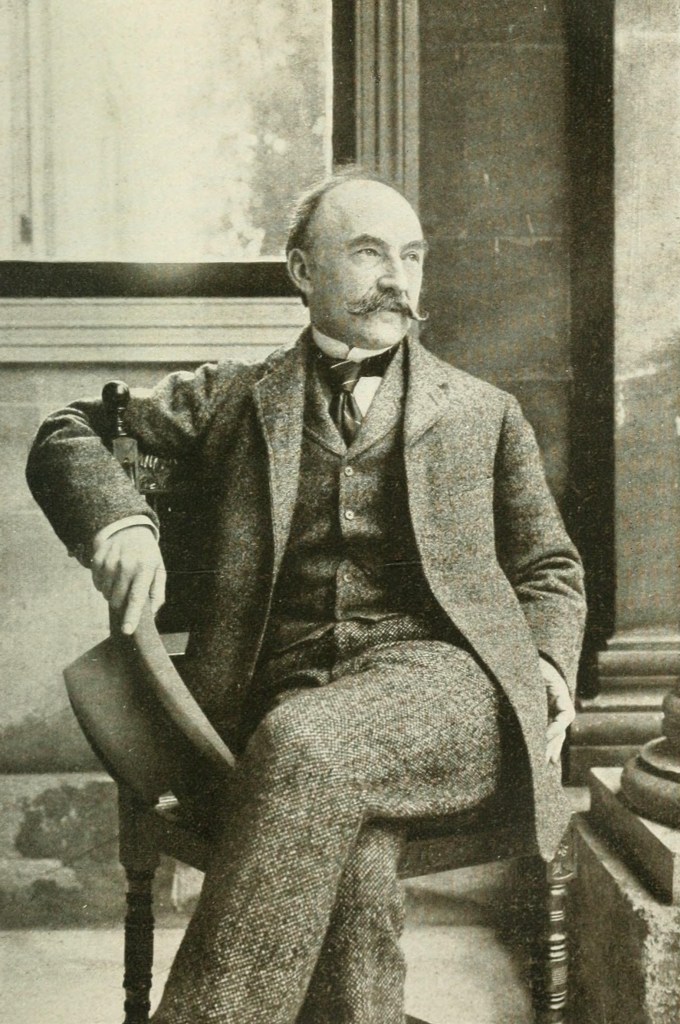
He was wealthy, with many resources at his disposal, as well as having the admiration of the public for his top selling books. When he died his estate was valued at around £100,000 the equivalent of £7million today. Even in death there was something not quite right as his ashes were interred in Poet’s Corner at Westminster Abbey, but his heart was buried, where he had requested to be laid, with his family in Dorset.

Apparently, Hardy was very uncomfortable with his first wife’s religious fanaticism. And yet he did like churches and went along to services at his local church. Before architecture he had even been thinking of a ‘career’ in the church. If he did believe in a supernatural power, it certainly wouldn’t have been a benevolent one. 

I do believe in God and I suppose that’s the reason I don’t have much time for fate. In Hardy’s novels the characters never seem to have a choice – bad stuff just keeps happening and there’s nothing they can do. He writes as if we are all pawns in some Almighty game of chess. Perhaps that’s how he felt.

Is real life like that? And we will never know what might have been!

I don’t think so. We all have choices – sometimes we make good ones and other times they might not be so good. But we aren’t puppets dancing to a story that has already been written. We are our own authors and the next chapter is up to us.
Sink or swim?

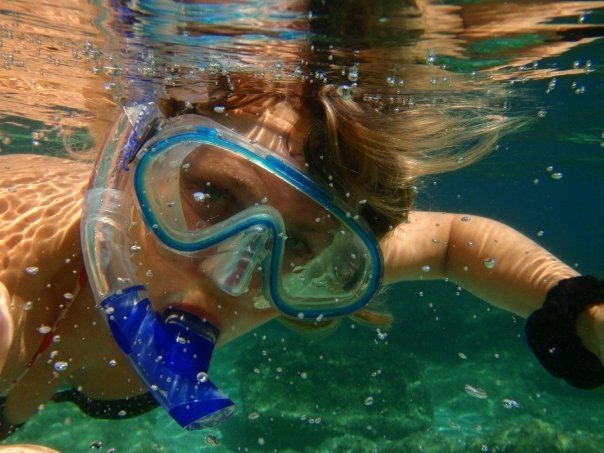
Today feels like I’m coming up for air after a long stretch underwater. It’s surprising how a crisis can throw everything else you’ve been worrying about into a vague blur. A bit like swimming under water, you can see the bottom of the pool and random arms and legs of other swimmers bubble past without much meaning. All you can hear is the sound of your own breathing. It’s a whole other world.

I went swimming in a pool for the first time in months this week and was happy that I hadn’t forgotten how to do front crawl. Amazingly it even felt quite natural and I didn’t arrive at the end of the pool desperate for air. I was still a lot slower than my current swim buddy – who is significantly younger. Ploughing up and down the pool gave me time to reflect on the last couple of weeks and the sound of my own breath in and out reminded me of sitting beside a hospital bed and watching my son breathe. He had to think about breathing, something most of us rarely do. At points he was using his whole body to help him draw in air. It was painful to watch.

This particular family crisis is over for now. I’m no longer lying awake in bed wondering if my son will make it through the night and praying for him to have the strength to go on breathing. I can look back with a grateful heart, that the tears and the fears – spoken and unspoken – are now consigned to a flashback or occasional nightmare. And I’m a believer in the power of prayer. The prayers and support of so many friends and family were a comfort for our family as we found ourselves in a very dark and scary place for a few days.

My perspective on life earlier this month felt a bit like swimming under water and coming up for air. Now I’m wondering if it’s the other way round. Do I live my life underwater, looking at the world through misty goggles, when I should be getting my head above water? Facing issues of life and death puts things into sharp focus – issues that were a worry become insignificant compared with the reality that is this moment.

snorkle

I’ve heard someone say we should make each day count because we never know what the next day will bring. Perhaps it’s time for a change in perspective. Time to embark on that adventure we’ve talked about, but never actually set off on… time to make the most of every moment of every day.

I want to breathe it all in because it’s God that gives me breath and that breath is life.

cross


colours of spring in March

Driving across the island this morning – I’ve decided this is Cyprus at its most beautiful.

It was just after 7am, warm and sunny with blue skies. The air was fresh like an English summer morning, with the scent of grass and flowers and the promise of a bright day ahead. The grass was glistening with dew and along the roadside there were bright yellow flowers everywhere. At one bend in the road a perfect picture of yellow flowers in the tall green grass sprinkled with scarlet poppies shouted to be noticed. I wanted to stop and take a photograph but airport check in time was calling and you never know what delays could be ahead, so I didn’t risk it.

This is a Middle Eastern spring and very beautiful it is too. We hardly experienced it last year, as the winter had been little more than a blip of cold snap with very little rain. Then almost without warning February and March had slipped into summer. But today the fields are lush and green, the trees are bristling with new leaves and wild flowers of yellow, red and blue lace the roadside at every turn. I’m worried that while I’m away the sun will burn up these colourful blooms and dry out the grass – returning the fields to parched mustard plains of scrub and dust. Please stay spring-like a little longer, just till I get back.

Cyprus has had one of longest and wettest winters for a long time, with piles of snow in the mountains too. Now just as the rain has done its magic and it looks like brightening up properly – I’m off to the UK.

A few hours in the air and this afternoon England feels a lot more brown, but beautiful in its own way. Here the trees are still bare, the sun is hiding behind some clouds, but there are patches of blue sky visible from the windows of the train. It seems like winter hasn’t hung up its coat yet.

I wonder why colours affect us so much? What is it about a blue sky early in the morning that makes us smile and happy to jump out of bed and start the day? Why are green fields more peaceful and relaxing on the eye than sand or desert? We love blue seas, but grey or brown waters look uninviting. There is no denying I like to live my life in colour and it definitely has an affect on how I feel.

Although England won’t offer as many ‘blue sky’ mornings as Cyprus, there are compensations. The sunsets are often spectacular with amazing cloud formations that are simply heavenly. There’s a soft light across the countryside here that we don’t get abroad – the difference between the gentle strokes of a water colour and the deep vivid shimmer of an oil painting. I was touched by nature’s beauty early this morning now I’m being wowed again from the train as the sun gilds a rippling cloud with gold and pink edges and spills its copper beams across the sky.

It really is true – ‘The heavens declare the glory of God, and the sky above proclaims his handiwork.’

Fact: Whether you’re in Cyprus or the UK.

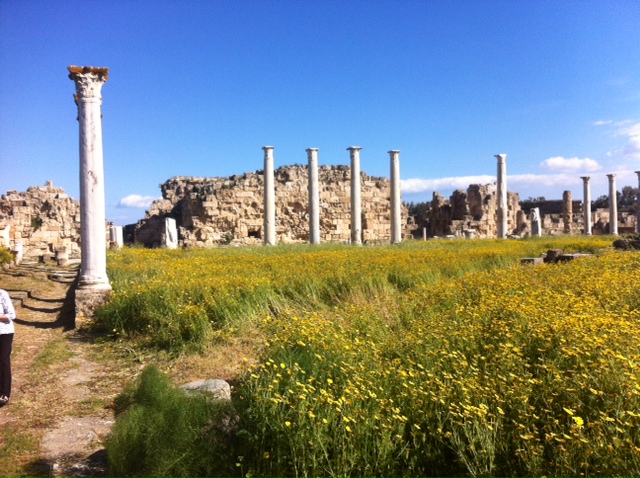
below: spring flowers and blue sky at Salamis on Sunday

photo salamis