It was the kind of anchor drama I’d been dreading. The man in a snorkel mask treading water by our boat said the words neither of us wanted to hear, “It’s stuck hard, I can’t move it. You’ll need to get professional divers.” A neighbouring skipper had volunteered to dive down and see if he could free our anchor, now stuck six metres down wedged under, what looked like some kind of metal frame.
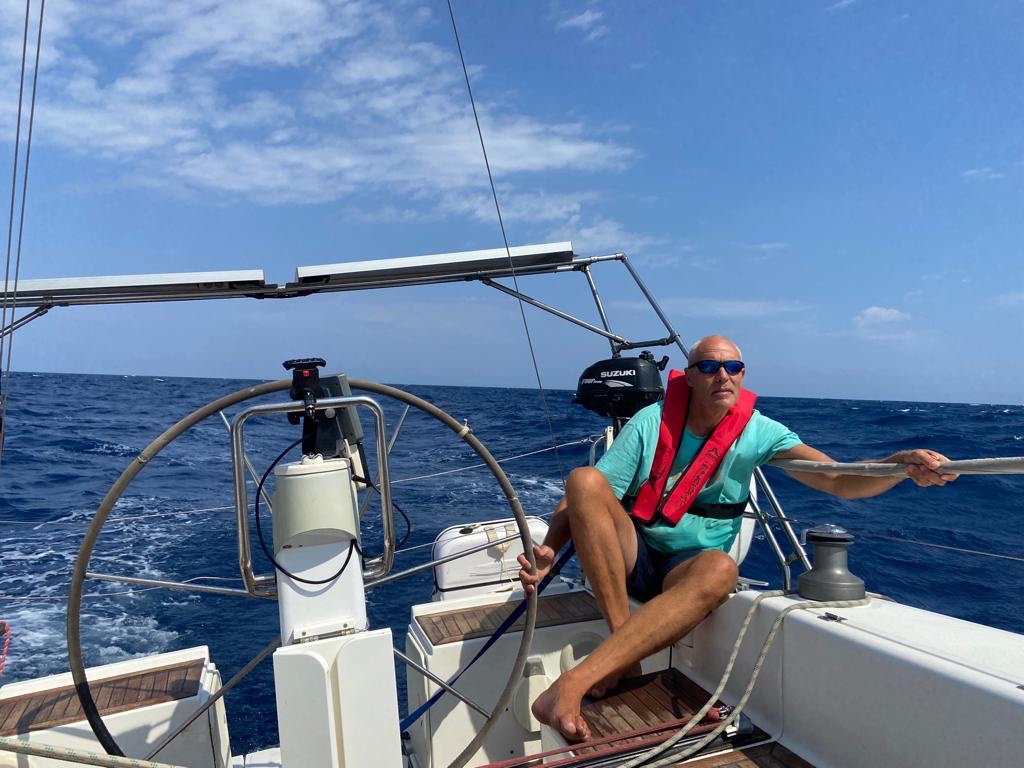
Less than an hour earlier we’d arrived at the distant marine reserve island after a six hour passage in pretty heavy seas and gusty winds. We were already tired. The waves had mounted steadily during the course of the passage. At their height we were being pushed, tipped and rolled around, with four metre waves breaking onto the boat. We were both completely soaked after an hour or so and I wished I hadn’t bothered with shorts and T-shirt and stayed in a bikini. After we’d put in another reef, we settled into the lurching and rolling motion. I was glad the trip across wasn’t any longer, because although we were making great progress at 7.5 knots, six hours in a rolling sea felt quite a while!
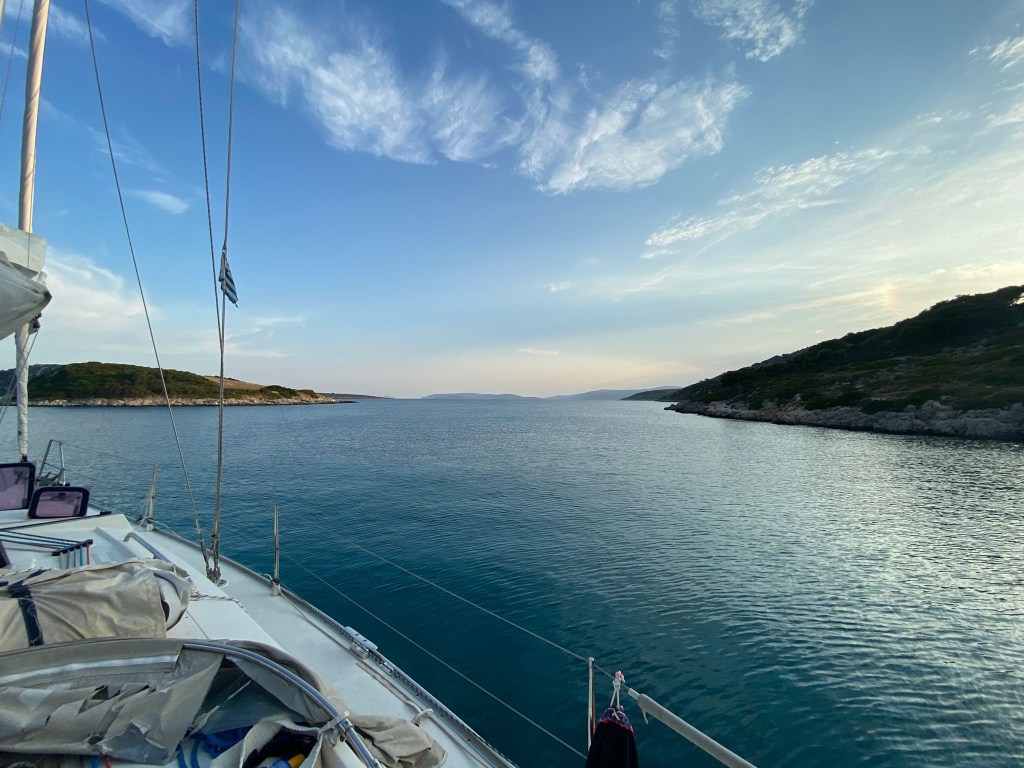
After we’d dropped anchor at the island in a quiet bay, there was yet another semi daunting task to be completed. Due to the location and wind direction we needed to take lines ashore to tie us to the rocks. I was dreading this, as on previous Mediterranean holidays it’s been a task for “the boys” – this time it was down to me to paddle board over with lots of rope, negotiate the spiky rocks and sea urchins, and worst of all tie bowlines to make everything secure. (I’m only good at these 70 per cent of the time!)
Sometime later, after swearing, “I’m never doing this again”, “I hate doing this” and “I can’t do this”, and then the inevitable sea urchin encounter on my left hand… I swam back to what I thought was a secure boat, at last. But a final check of the anchor had almost been the final straw, when we saw, instead of wedged in the sand, it was jammed under some iron debris on the seabed.
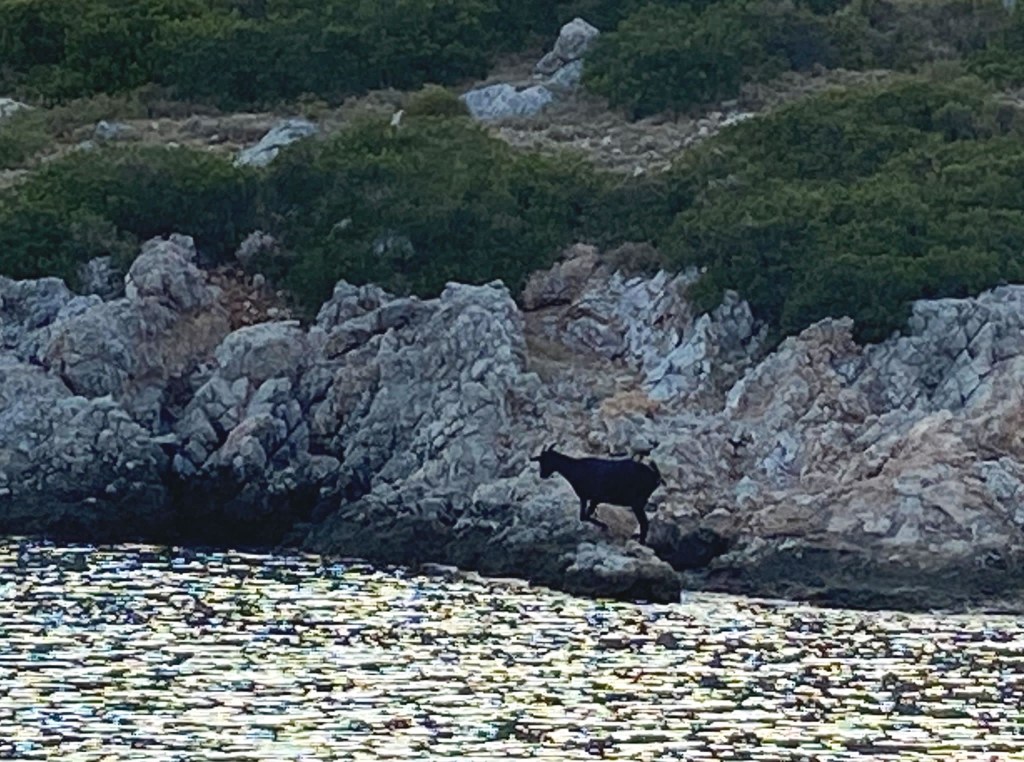
Tension was rising. We were in a nature reserve at the north end of the Sporades islands, it was beautifully quiet and remote with no phone signal whatsoever. So, how would we call for divers? And what would it cost to free our anchor? The skipper took the paddle board ashore and climbed a nearby hill in search of phone signal. There were plenty of bleating goats, but still no signal. His face was grim when he returned to the boat. There were various options to consider, none of which we wanted to do, involving leaving the anchor and returning with divers, deploying a kedge anchor and trying to free it ourselves somehow… a few prayers were said.
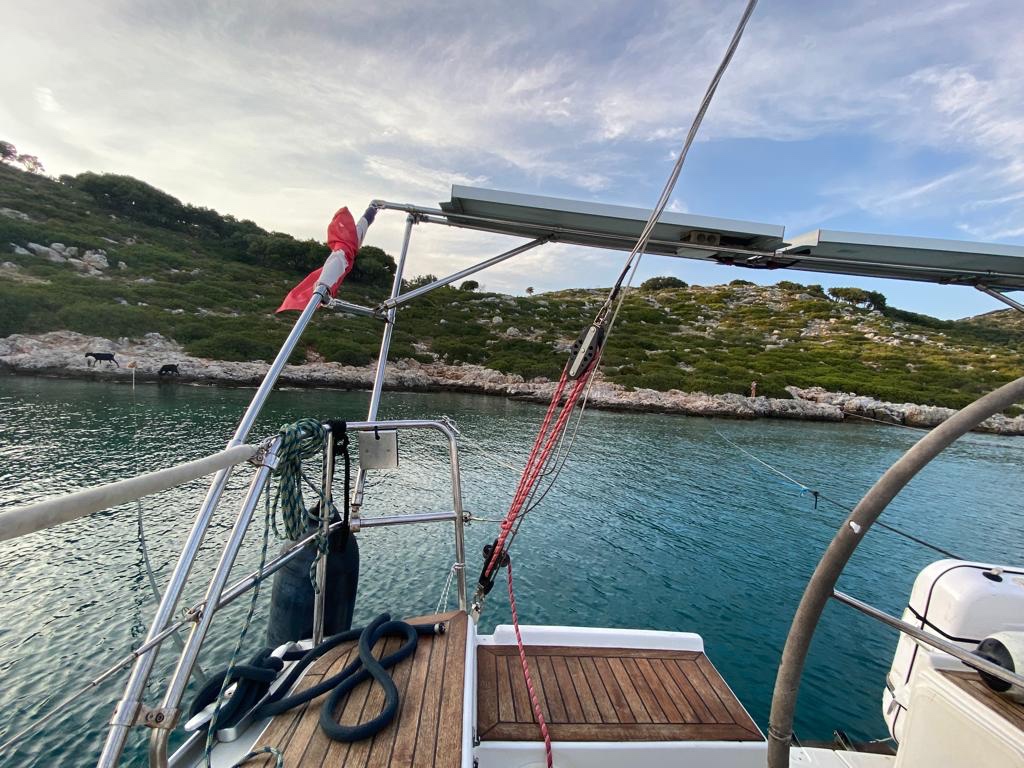
The answer came quite quickly in the end in the form of a “Greek angel” called Nasos.
Nasos, a skipper on another yacht in the bay, was woken up from an afternoon rest by his crew, who’d been alerted to our dilemma and plea for help. It wasn’t long before he was alongside in his dinghy, snorkel and flippers to the ready.
“Where have you come from?” He asked.
“England,” we said!
“No, today I mean!”
We explained we’d sailed from Halkidiki and he was surprised, as he’d also sailed across from the same port an hour earlier. He said we must be tired, as it has been quite a tiring crossing.
“I will try and help you,” he said. “ Are you with a flotilla?”
“No,” we answered. “We’re on our own, that’s the problem.”
“Don’t worry,” said Nasos.“ You are not alone anymore, Nasos is here. We will solve it together!”
What a lovely thing to hear!
A few minutes later after carefully examining the anchor position through his mask he dived down. Very soon after he reappeared and said the magic words, “It’s free!” He explained the anchor had dragged and been caught in what was actually an old bed frame on the seabed and he had been able to yank it free.
We were so relieved and grateful, but as we’d only just met him and we were all wearing very little, we couldn’t hug and kiss him, instead we gave him a bottle of gin! Nasos, the incognito angel, even helped us re-anchor and re do our lines without too much stress. What a difference it makes when you have a “friend” to tackle a problem together.
After a restful and peaceful night on anchor we went to thank Nasos again and enjoyed real Greek coffee and sweet treats on his boat with his crew. We laughed about being caught by a bed and wondered how it had ever come to be on the bottom of the sea in such a remote place.
I’m not sure what to rename this little bay. It could be ‘Bedframe Bay’ but perhaps ‘Angel Bay’ would be more appropriate? We hope to catch up with Nasos again before he heads back north, if only to find out what other “angel missions” he’s been called to 😉.
 rachelfarmer