Incognito angel to the rescue

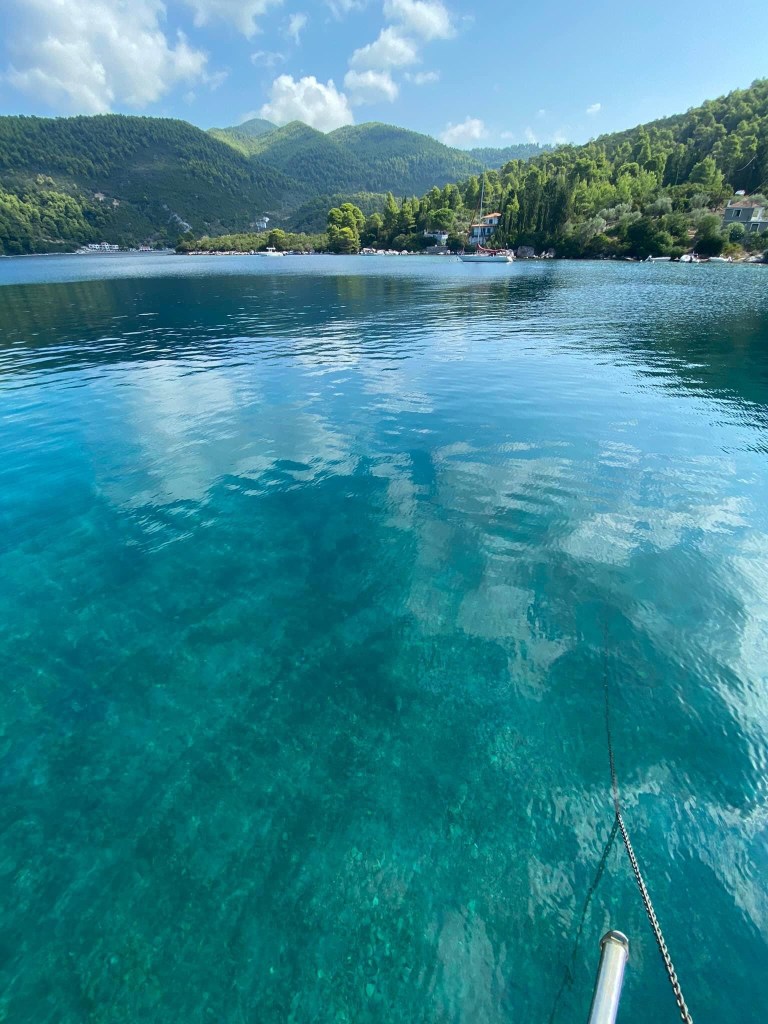
It was the kind of anchor drama I’d been dreading. The man in a snorkel mask treading water by our boat said the words neither of us wanted to hear, “It’s stuck hard, I can’t move it. You’ll need to get professional divers.” A neighbouring skipper had volunteered to dive down and see if he could free our anchor, now stuck six metres down wedged under, what looked like some kind of metal frame.

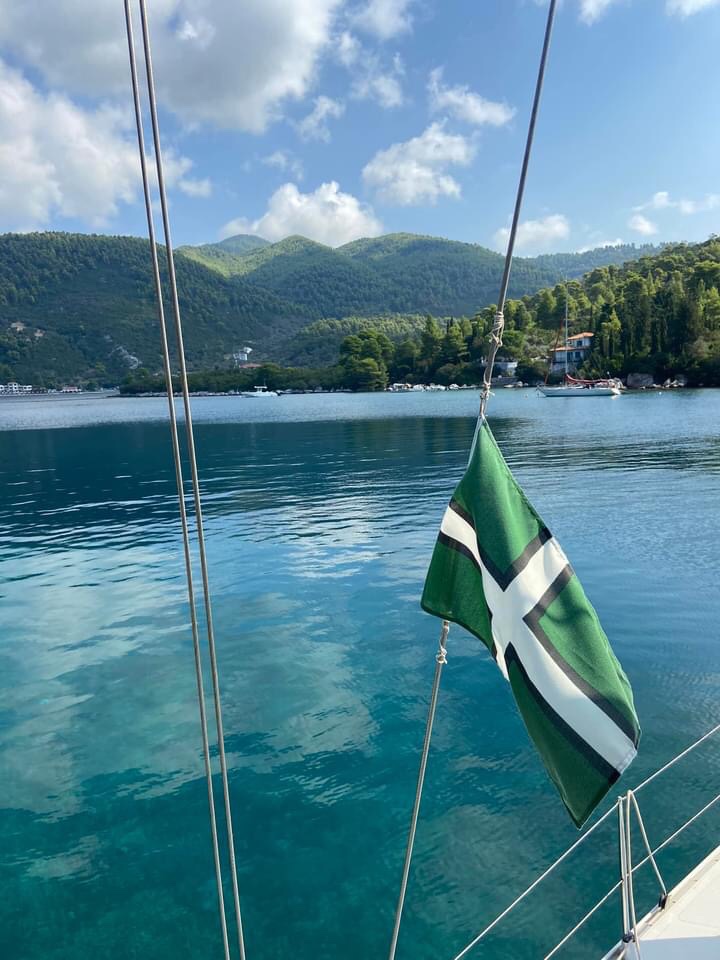
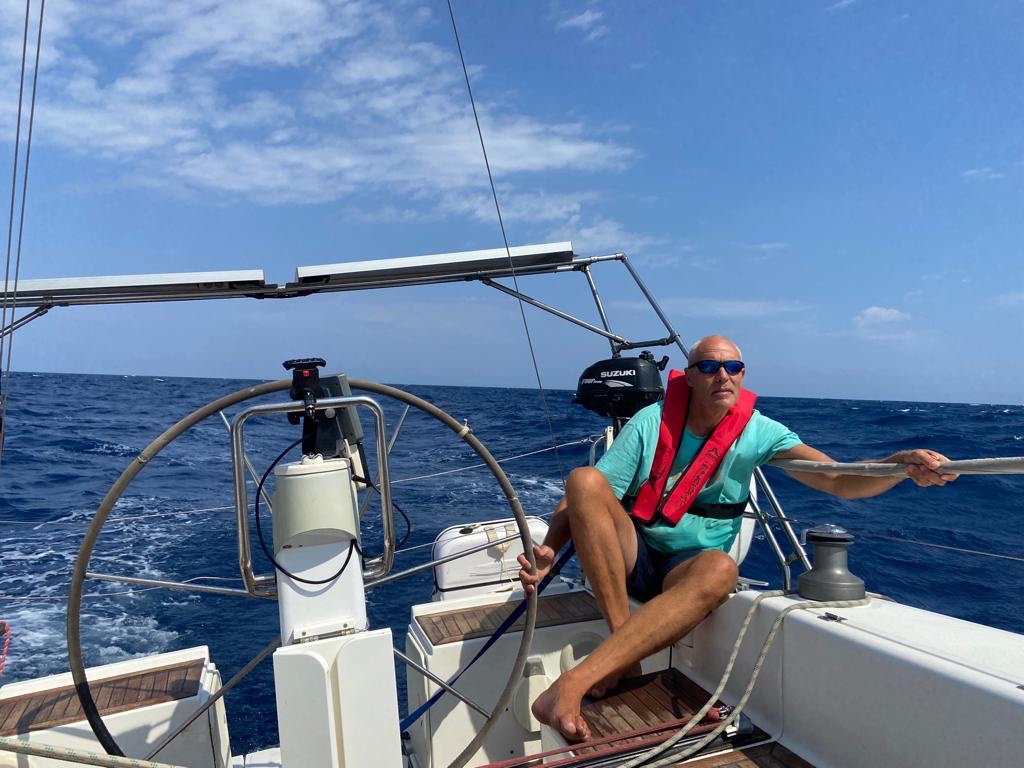
Less than an hour earlier we’d arrived at the distant marine reserve island after a six hour passage in pretty heavy seas and gusty winds. We were already tired. The waves had mounted steadily during the course of the passage. At their height we were being pushed, tipped and rolled around, with four metre waves breaking onto the boat. We were both completely soaked after an hour or so and I wished I hadn’t bothered with shorts and T-shirt and stayed in a bikini. After we’d put in another reef, we settled into the lurching and rolling motion. I was glad the trip across wasn’t any longer, because although we were making great progress at 7.5 knots, six hours in a rolling sea felt quite a while!

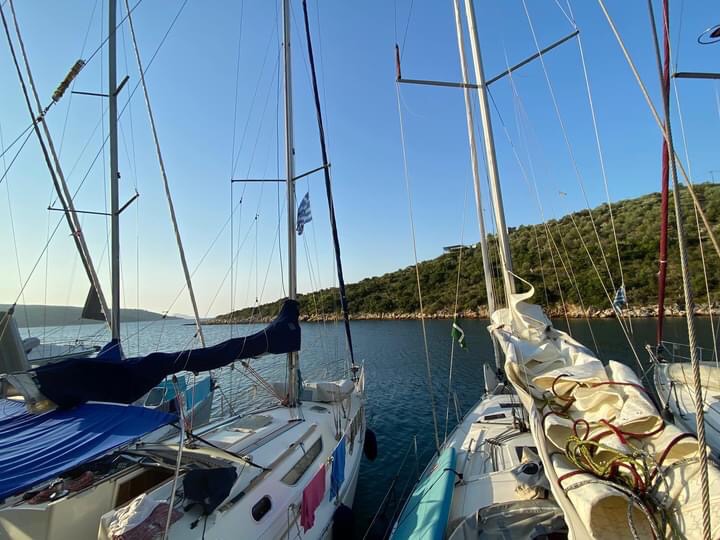
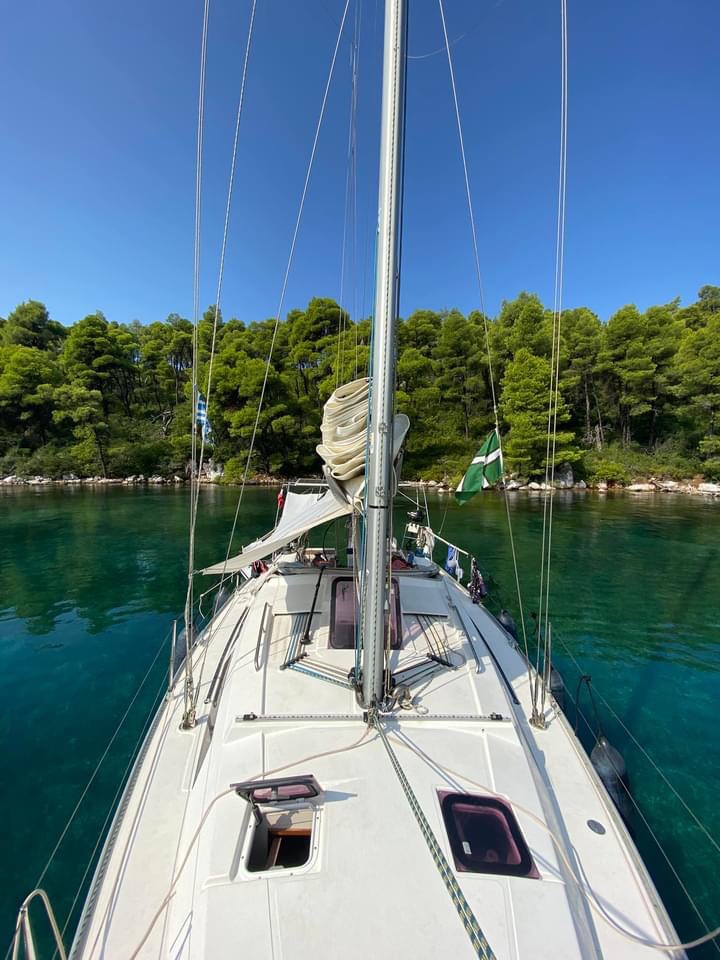
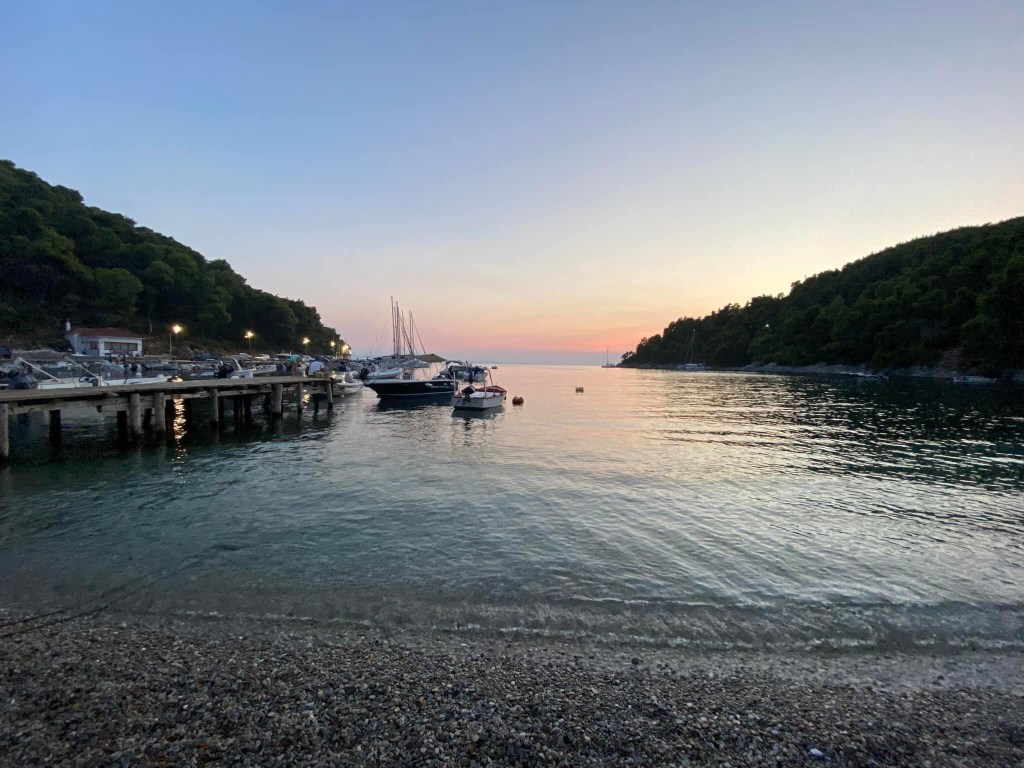
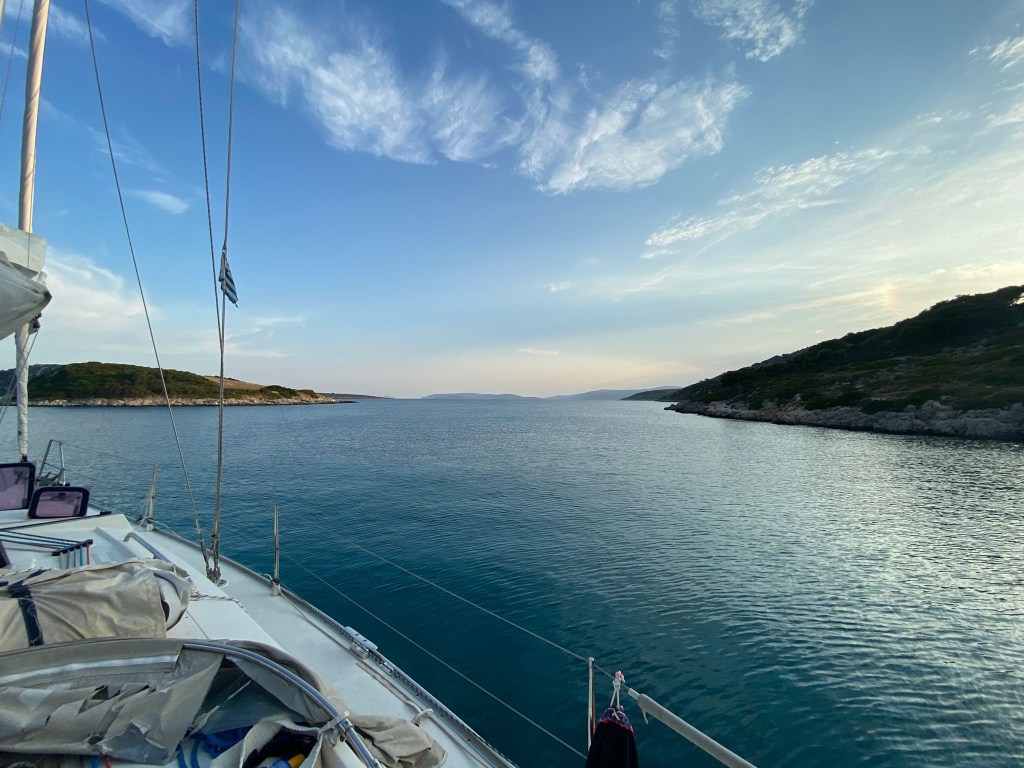
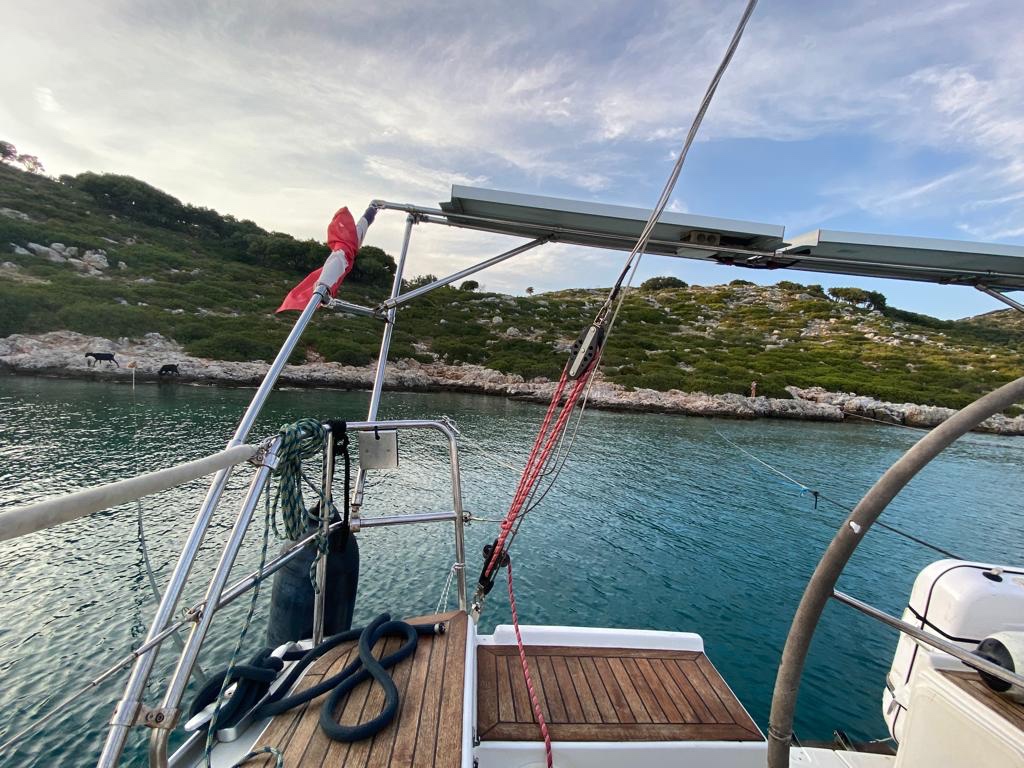
After we’d dropped anchor at the island in a quiet bay, there was yet another semi daunting task to be completed. Due to the location and wind direction we needed to take lines ashore to tie us to the rocks. I was dreading this, as on previous Mediterranean holidays it’s been a task for “the boys” – this time it was down to me to paddle board over with lots of rope, negotiate the spiky rocks and sea urchins, and worst of all tie bowlines to make everything secure. (I’m only good at these 70 per cent of the time!)

Sometime later, after swearing, “I’m never doing this again”, “I hate doing this” and “I can’t do this”, and then the inevitable sea urchin encounter on my left hand… I swam back to what I thought was a secure boat, at last. But a final check of the anchor had almost been the final straw, when we saw, instead of wedged in the sand, it was jammed under some iron debris on the seabed.

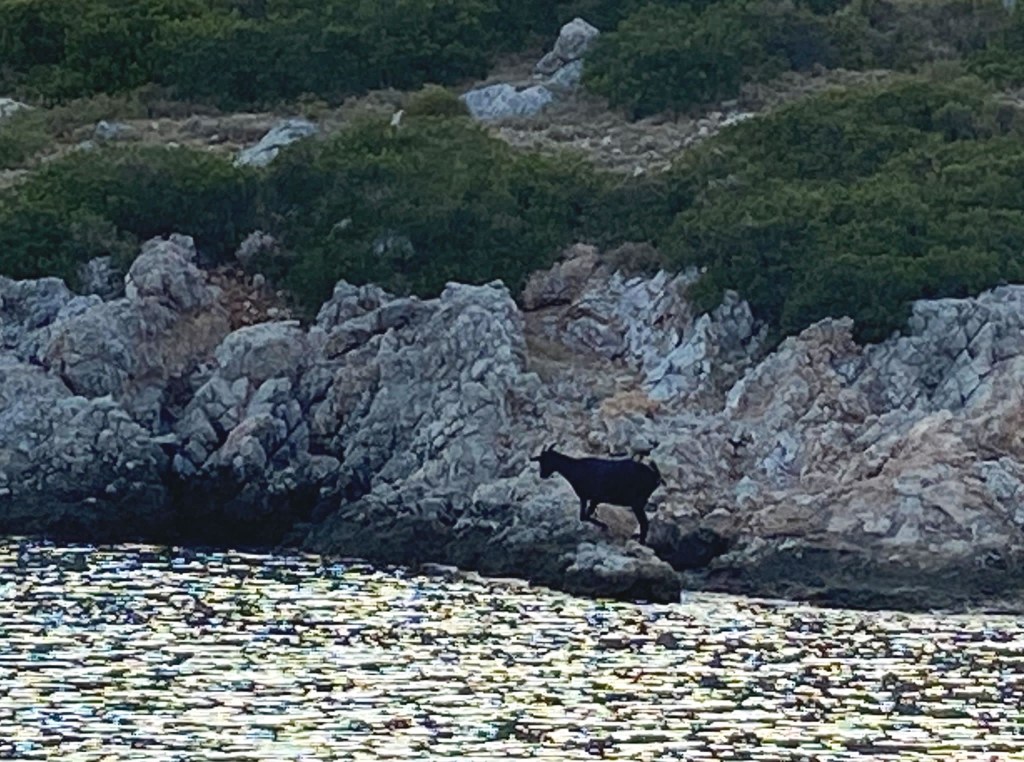
Tension was rising. We were in a nature reserve at the north end of the Sporades islands, it was beautifully quiet and remote with no phone signal whatsoever. So, how would we call for divers? And what would it cost to free our anchor? The skipper took the paddle board ashore and climbed a nearby hill in search of phone signal. There were plenty of bleating goats, but still no signal. His face was grim when he returned to the boat. There were various options to consider, none of which we wanted to do, involving leaving the anchor and returning with divers, deploying a kedge anchor and trying to free it ourselves somehow… a few prayers were said.

The answer came quite quickly in the end in the form of a “Greek angel” called Nasos.

Nasos, a skipper on another yacht in the bay, was woken up from an afternoon rest by his crew, who’d been alerted to our dilemma and plea for help. It wasn’t long before he was alongside in his dinghy, snorkel and flippers to the ready.

“Where have you come from?” He asked.

“England,” we said!

“No, today I mean!”

We explained we’d sailed from Halkidiki and he was surprised, as he’d also sailed across from the same port an hour earlier. He said we must be tired, as it has been quite a tiring crossing.

“I will try and help you,” he said. “ Are you with a flotilla?”

“No,” we answered. “We’re on our own, that’s the problem.”

“Don’t worry,” said Nasos.“ You are not alone anymore, Nasos is here. We will solve it together!”

What a lovely thing to hear!

A few minutes later after carefully examining the anchor position through his mask he dived down. Very soon after he reappeared and said the magic words, “It’s free!” He explained the anchor had dragged and been caught in what was actually an old bed frame on the seabed and he had been able to yank it free.

We were so relieved and grateful, but as we’d only just met him and we were all wearing very little, we couldn’t hug and kiss him, instead we gave him a bottle of gin! Nasos, the incognito angel, even helped us re-anchor and re do our lines without too much stress. What a difference it makes when you have a “friend” to tackle a problem together.

After a restful and peaceful night on anchor we went to thank Nasos again and enjoyed real Greek coffee and sweet treats on his boat with his crew. We laughed about being caught by a bed and wondered how it had ever come to be on the bottom of the sea in such a remote place.

I’m not sure what to rename this little bay. It could be ‘Bedframe Bay’ but perhaps ‘Angel Bay’ would be more appropriate? We hope to catch up with Nasos again before he heads back north, if only to find out what other “angel missions” he’s been called to 😉.

All at sea

Have you ever been in one of those crisis moments when you say to yourself, we’ll look back on this tomorrow and think, ‘what a great adventure that was…’?

That was 24 hours ago…*

“I’ll just do it then, shall I?” It was one of those questions I didn’t need to ask, because there weren’t any other options left.
“Boom!”
Another huge waved crashed across the bows of the boat which were immediately rising to the crest of a second wave. I had butterflies in my stomach as I turned to inch my way along the deck, the lines of my safety harness scraping along the tape secured to the boat.
‘Be brave’ was the only thing I could think.
Half way along the deck I sat down gripping the metal stays with one hand as I unfastened and refastened the clip to the next set of tapes. My body was tense and my fingers trembled, mainly with cold. Up ahead at the bows the next wave was pounding down showering me with spray and I kept low edging my way towards the ‘pointy end’…

It had already been quite a day at sea. We’d set off, just the two of us, at 6am to catch the tidal stream. Daybreak sails are some of my favourite. As the sky begins to lighten and sun’s rays are soft and golden, full of unspoken promises of what lies ahead. The wind had been a bit stronger than forecast and we’d made good progress hoping to push through to Dartmouth – our final destination. But after a change in wind direction and with the tide turned against us, we decided to divert to Salcombe till later in the afternoon when the tides would be in our favour.

Always expect the unexpected in sailing. As we attempted to furl the genoa (pull in the sail at the front which wraps around a wire) the rope snapped. It wasn’t an easy fix, so sadly, we found ourselves returning to where we’d come from – more than three hours sail west. Four hours later, furling line temporarily fixed with a bit of help, we headed back to sea. We’d made reasonable time and decided to try and make Dartmouth that evening. The voyage took us through the notorious Start Point where the sea can be quite rough. Neither of us had sailed there before. We’d got into big waves about an hour earlier, but now they were getting higher and there were white horse breaking all around us.

We were more than two or three miles off shore, as we began to round the light house, and watched the blue curve of Start Bay emerge in the distance. 

“I don’t think we can make it…we’re going to have to turn back.”
It was one of those moments. You could call it mutiny.
Waves were breaking across the front of the boat. The sun would be setting in an hour. The wind was coming from where we needed to go. We’d been sailing pretty much non stop for more than 12 hours. But there was one other option… to me this was better than going back again.

This involved one of us going to the front of the pitching boat to fix the tangled line and help wind in the sail by hand. Meanwhile, the other steered the boat through the waves while juggling two other ropes to enable the awkward sail to be safely pulled in. We’d planned to be in calmer waters for this procedure, but we couldn’t risk the furling line breaking again.

So, there I was, kneeling at the front of the boat on the biggest and scariest white water roller coaster ride ever. In between each fresh wave, which broke across me, I attempted to untangle the rope, while the stressed skipper shouted instructions above the waves. Apart from being scared of slipping in, the biggest problem was my bobble hat which insisted on sliding down over my eyes. I thought the rope was untangled and then saw it wasn’t. As I gripped the metal stanchion to steady myself while the boat slammed down onto yet another wave, I did think, ‘Hopefully, we’ll be laughing about all this tomorrow.’

The best thing about moments like that may not be the moments themselves, but it’s the contrast of looking back and being glad you got through it.

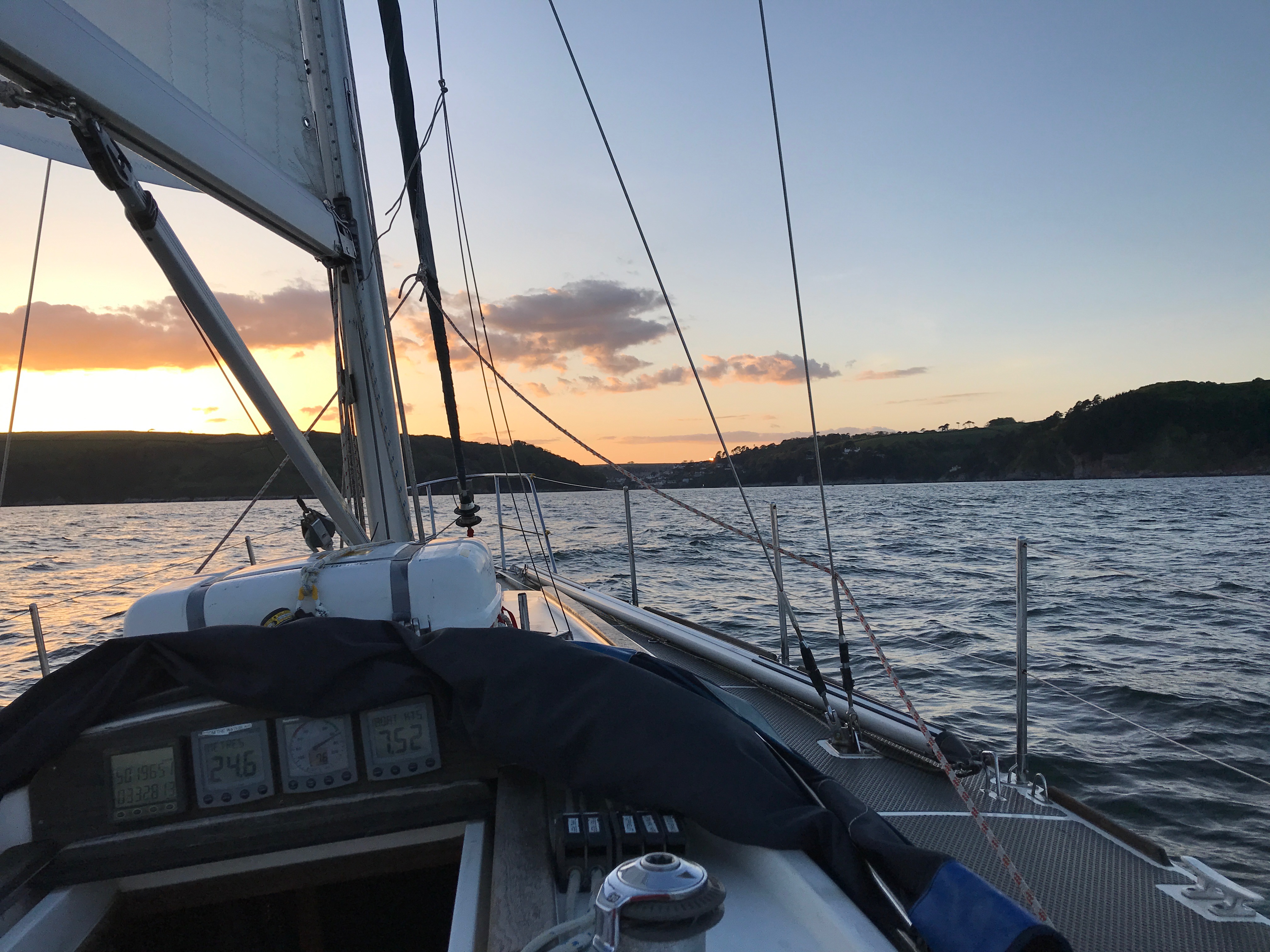
An hour or so later as our little boat nudged its way between the rocks and the castle guarding the entrance to Dartmouth, the sun was beginning to sink behind the hills. A mooring buoy was beckoning and the boom of a canon up above at the Naval College signalled that the day was over. 

We both sighed and smiled. What a day it had been! Some 88 nautical miles travelled since first light. Now the dangers were past, we were in calm waters and a safe harbour for the night. There is no better feeling. And it’s one of the many reasons why I love sailing.

*at the time of writing

Blue skies and unexploded bombs

It’s not the noise of gunfire I’m bothered about, it’s the unexploded bombs …

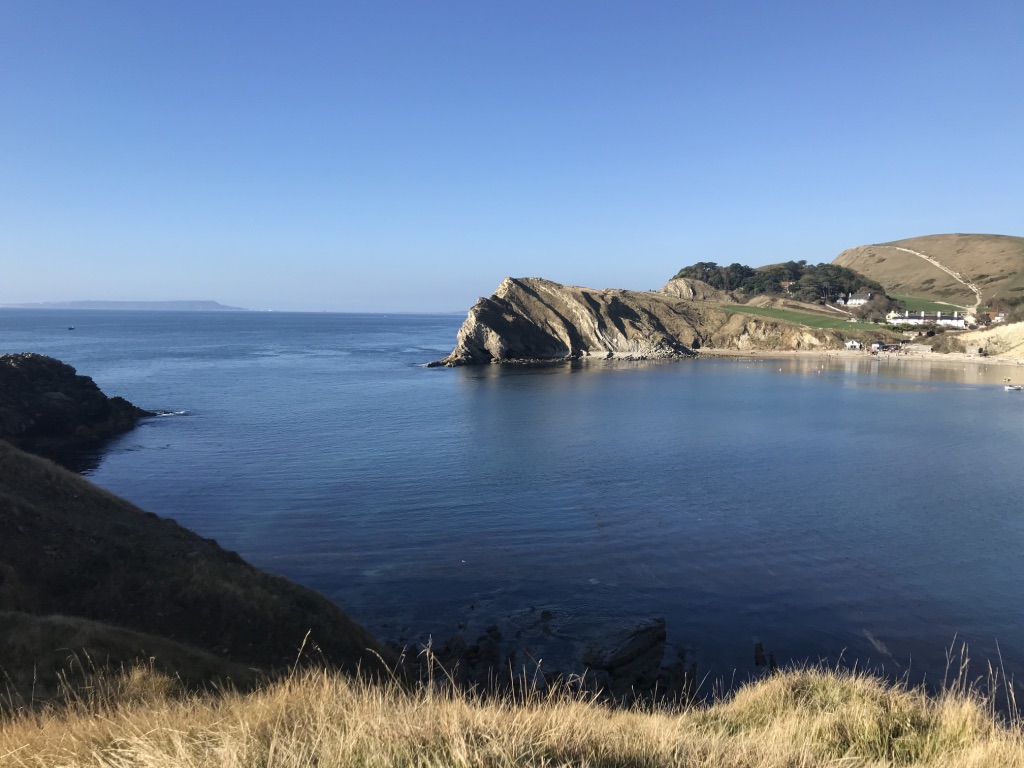
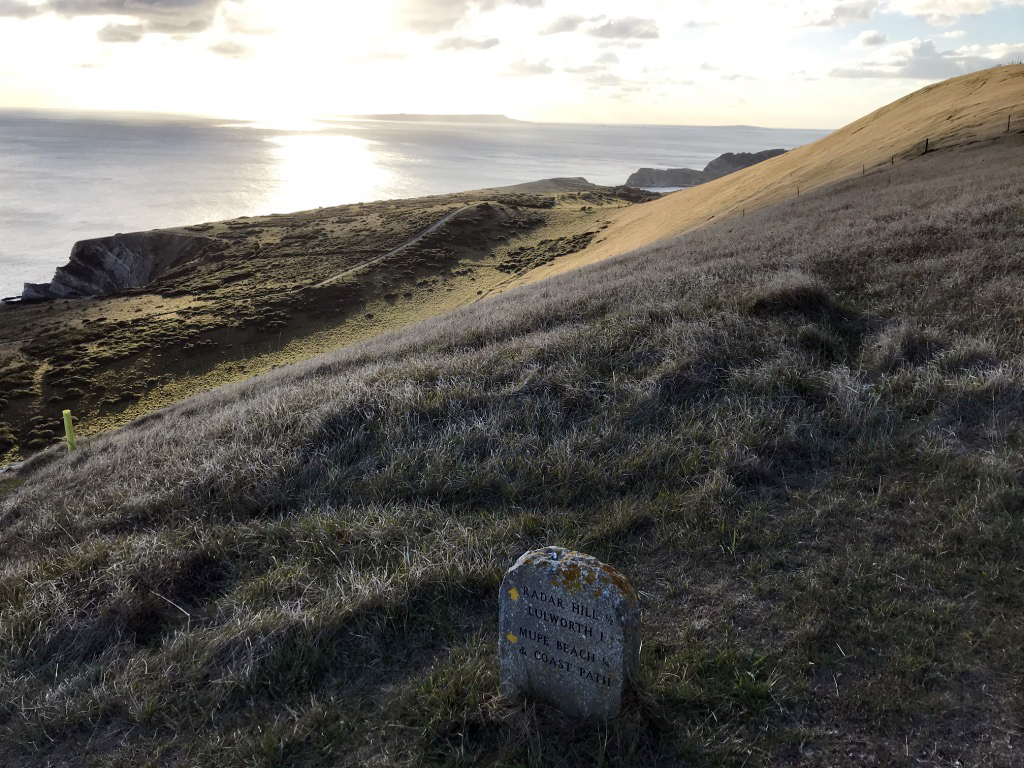
Our new home at Lulworth Camp in Dorset has been full of surprises. There’s the occasional rattle of gunfire, but with a sea view from almost every window, I’m not complaining. I’ve also nabbed the room with the best view as my study – so no excuse about lack of inspiration for writing.

UNADJUSTEDNONRAW_thumb_194aThe night before we moved in we enjoyed a stay in a local hotel overlooking Lulworth Cove. It was a real treat. We were even upgraded and that never happens to me. The suite had its own colour coordinated settee and tea and proper coffee and an enormous bed. The trouble is moving house and all the excitement didn’t equal a peaceful night’s sleep… At 4am we were discussing a nightmare about a crab (something to do with what we’d eaten apparently), when I was unnerved by something and let out a bit of a scream. Moments later there was a knock on the door asking us to, “keep it down in there.” One of us shouted that we were all right, convinced they would think there was a murder happening. Breakfast was a little awkward. Moving scrambled egg around the plates, we wondered which of the other couples had banged on our door and did they know we were ‘the screamers’?
We’re in Thomas Hardy country now, so exploring should be done on foot, or at least by bicycle. The local ordinance survey map shows footpaths galore, with one small hitch; many of the paths crisscross the army ranges that surround us and live firing means they’re only open at weekends and during school holidays.

After the hazy days of unpacking boxes, painting rooms (because you can only take so much magnolia) and finding our way to a supermarket – the first free weekend arrived bright and sunny. Although the garage sort out was beckoning, we turned our back on it and joined two energetic members of the family pedalling east in search of a forgotten village and an almost deserted beach.

The long climb up Tyneham Hill made me dream of an electric bike, but the view from the top and the sausage sandwiches helped. It seemed strange to be cycling through a firing range where cows and sheep grazed in amongst rusted out tanks. There was really very little to show that this was army territory apart from some large florescent numbers that stood out from the gorse on the hillside.

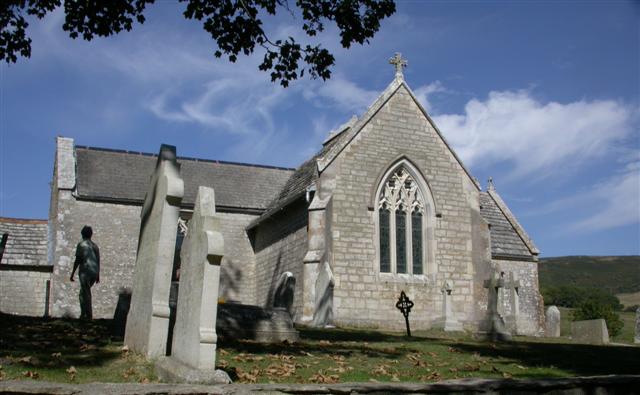
The next surprise was Tyneham village – a place that time forgot. The deserted village is only accessible when the firing ranges are open and lies just up from the sea, nestled in a valley at the foot of a fantastic freewheeling hill. The cluster of stone buildings includes a church, a school, some tumbled down cottages and the remains of a vicarage. When we arrived there were small groups of people wandering between the buildings, but unlike many tourist spots, a hush had descended. People spoke in muted voices as if, Doctor Who-like, we had travelled back in time to the 1940s when the village folk had moved out to allow the army to prepare for D-Day.

Tyneham_Church_-_geograph.org.uk_-_1889

Tyneham Church by Ben Gamble  www.geograph.org.uk 

The story of Tyneham deserves a dedicated blog and I’ve vowed to return for longer next time and soak up that palpable history from the beautifully preserved schoolroom to the church with its colourful tiles and walls lined with photographs from the past. A remembrance service is held there each year, which must be very poignant. Part of the sign left on the church door by parishioners in 1943 read: “…We have given up our homes to help win the war to keep men free. We will return one day thank you for treating the village kindly.” Sadly, they never returned.

After a tough cycle, for some of us, and an exceptionally hot day for October, we were looking forward to a dip in the sea. There was a slight hitch as no-one had brought a bike lock and a zealous ranger told us we couldn’t even push our bikes on the range path to the beach. Undeterred we hid the bikes in some bushes and hoped for the best.

Warbarrow Bay emerged around the corner glistening in the sunshine and we all stripped off and plunged into the very cold crystal clear water. Five minutes was long enough for me to say I’d had a swim to the anchored boat and back. It was amazing to think we were swimming in the bay we could see from our house.

The next weekend wasn’t quite as warm, but we decided to explore the other end of the bay on the range walks and battled our way up a very steep hillside on the cliffs, while a sharp northerly wind made me pull my woolly hat down over my ears.

We spotted a sign warning us to keep off the barb wired beach due to unexploded shells, which we dutifully obeyed. Further up the cliff the path broadened out and with no-one about one of us decided it was safe to venture off the path a few metres into some shrubbery to… you know, call of nature. It turned out this was a bad idea. Catching up with me a few minutes later I heard how he’d spooked himself after kicking over a piece of metal, only to read the words: ‘Danger unexploded shells – keep out’. At which point he looked around and spotted dozens of pieces of metal poking out from the undergrowth in all directions.

Oops!

Lesson 1: Use the facilities before you venture out on the ranges. Unexploded anythings deserve respect.

cliff walk lulworth

“We should have gone to Cyprus”

Gallery

This gallery contains 3 photos.

“Let’s have an adventure,” I said. “Let’s hire a car and explore somewhere hot,” I said. I turned my nose up at somewhere safe and familiar… I shook my head at the all inclusive hotel deals or the easy option … Continue reading

A cup full of surprises

“Surprise!”
It’s a word that either brings joy and excitement or trepidation and wariness – depending on your perspective.

I like surprises… well I like ‘good surprises’ like a bunch of flowers, an unplanned evening out or unexpected visitors at the door.

On one particular birthday I arrived home from work to find the drive lit up with fairy lights and a large pair of knickers decorating the front door… I knew something was up. When I stepped inside I saw a large group of friends, some from far away, who were all grinning at me as I stood by the open front door. It was unexpected and there was lots of laughter, except I felt a bit work weary and in need of a change. I was ushered upstairs where clean clothes were waiting and it was the start of a lovely Bridget Jones themed party that helped take the edge off turning 40.

Out sailing last week, it was also drawing towards the end of a long day. We’d set sail mid morning and the wind was strengthening. It was still a few miles to go before we would arrive at the safety of our next port and the bows of the boat were dipping and crashing through the waves. The sea that had been calming, seemed to be building up for heavier weather. Suddenly a dark shape caught my eye as it disappeared under the boat, then another and another and out across the other side two dolphins jumped in unison their bodies glistening in the late afternoon sunshine. We smiled and laughed – it was a lovely surprise and helped us on with the last leg of the journey.

Sometimes it’s the little things like this that surprise me. They offer a glimpse of joy when I’m not expecting it.

I’m constantly surprised by the beauty of the sea and the changing coastal scenery around our home where there always seem to be unexpected views and finds, from abandoned boats to useful bits of driftwood. Today was no exception. sea viewOn a walk to the beach I’d been keeping an eye out for colourful painted rocks hidden around the island. One ingenious army wife came up with the idea of painting some rocks and leaving them in various locations for children (and adults) to find… it’s called Thorney Rocks and has its own Facebook page. Coming across the hidden gems now makes walking round the island even more engaging as we wonder what surprise rocks we’ll spot in unusual places.
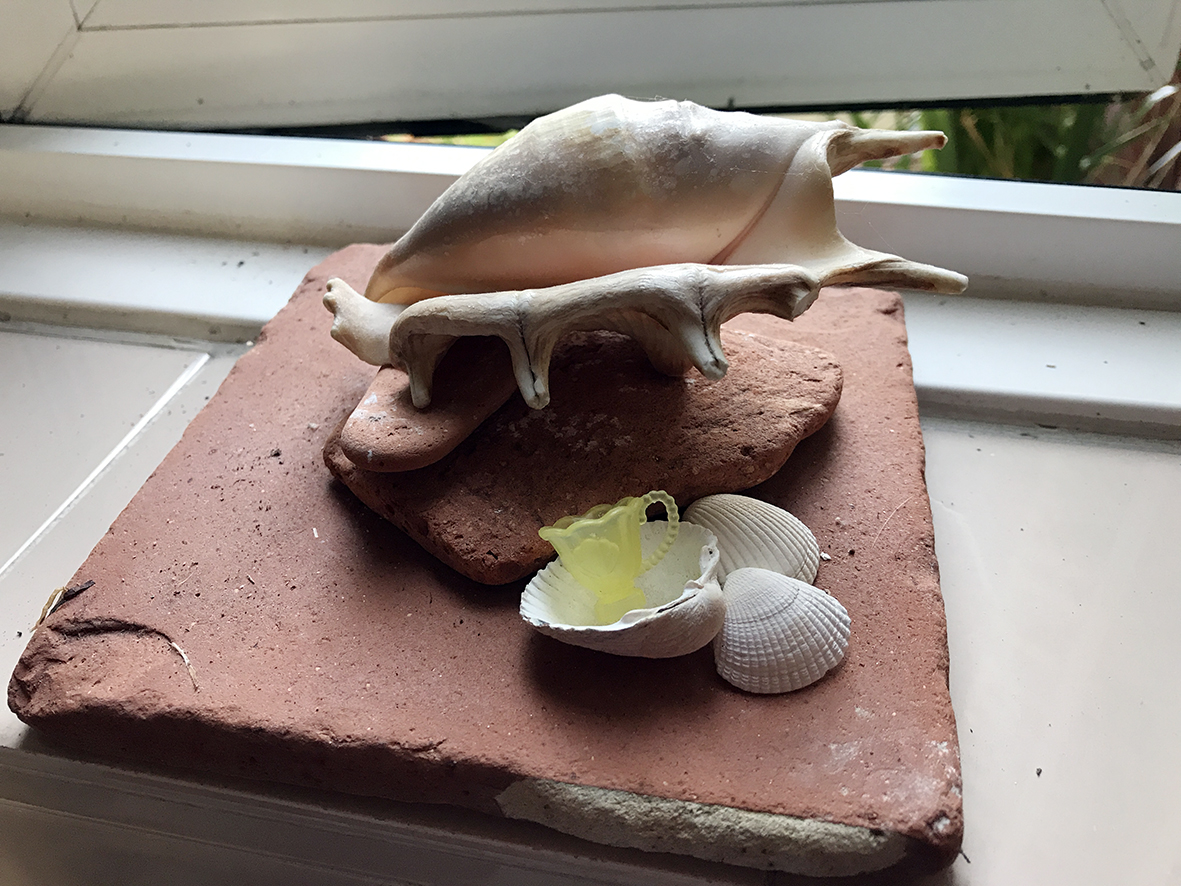
I didn’t notice any rocks this morning, but sitting down amongst the pebbles watching the receding tide I spotted something yellow and ‘unpebbly’. It turned out to be a tiny teacup. I don’t know what made me look down or how it got there… I suppose it must have been left by a forgetful fairy after a beach tea party!

This slideshow requires JavaScript.

Anyway it was a good surprise, but easily missed. If I’m not careful surprises pass me by because my head is so full of ‘to do’ lists and issues I don’t have time to look around and see them. They may not be the gob-smacking surprises that leave me gasping for air, but they are the kind of unexpected sights or detail that prompt a smile and offer a glimpse of joy.

P.S. If you’ve lost a tiny yellow cup the size of my thumbnail do get in touch, I have it safe. It is currently part of the beach treasure trove on the bathroom windowsill…

trove

What’s in a name?

I never liked my own name when I was growing up. Other friends’ names seemed much ‘cooler’ and less old fashioned. I knew Rachel was a name in the Bible and that didn’t help. I wished I had a name like Mandy, Sally or even Jackie and worst of all I didn’t even have a middle name. I guess my parents ran out of ideas by the time they got to number five! So upset by this omission, I gave myself a middle name and for a few years I was ‘Rachel Mandy Reay’ – if anyone asked. To cap it all one teenage boyfriend told me my surname didn’t have enough syllables to be respectable. His was Buchanan!

Giving out or choosing names is a big responsibility. As I grew up Rachel didn’t seem such a bad name – I got used to it. Over the years I have puzzled over names for pets, followed by the joy of picking names for our own children. This was even more complicated as the names had to be agreed by two of us and they mustn’t include names of former boyfriends or girlfriends…

One thing I’ve never done until recently is give a name to a house. All our homes had numbers, although the last one also had a name. It was called ‘The White House’ – not because it had large pillars or an American flag but because it was painted white. But after we’d sandblasted the paint back down to red bricks the name didn’t fit anymore, so we just stuck with the number.

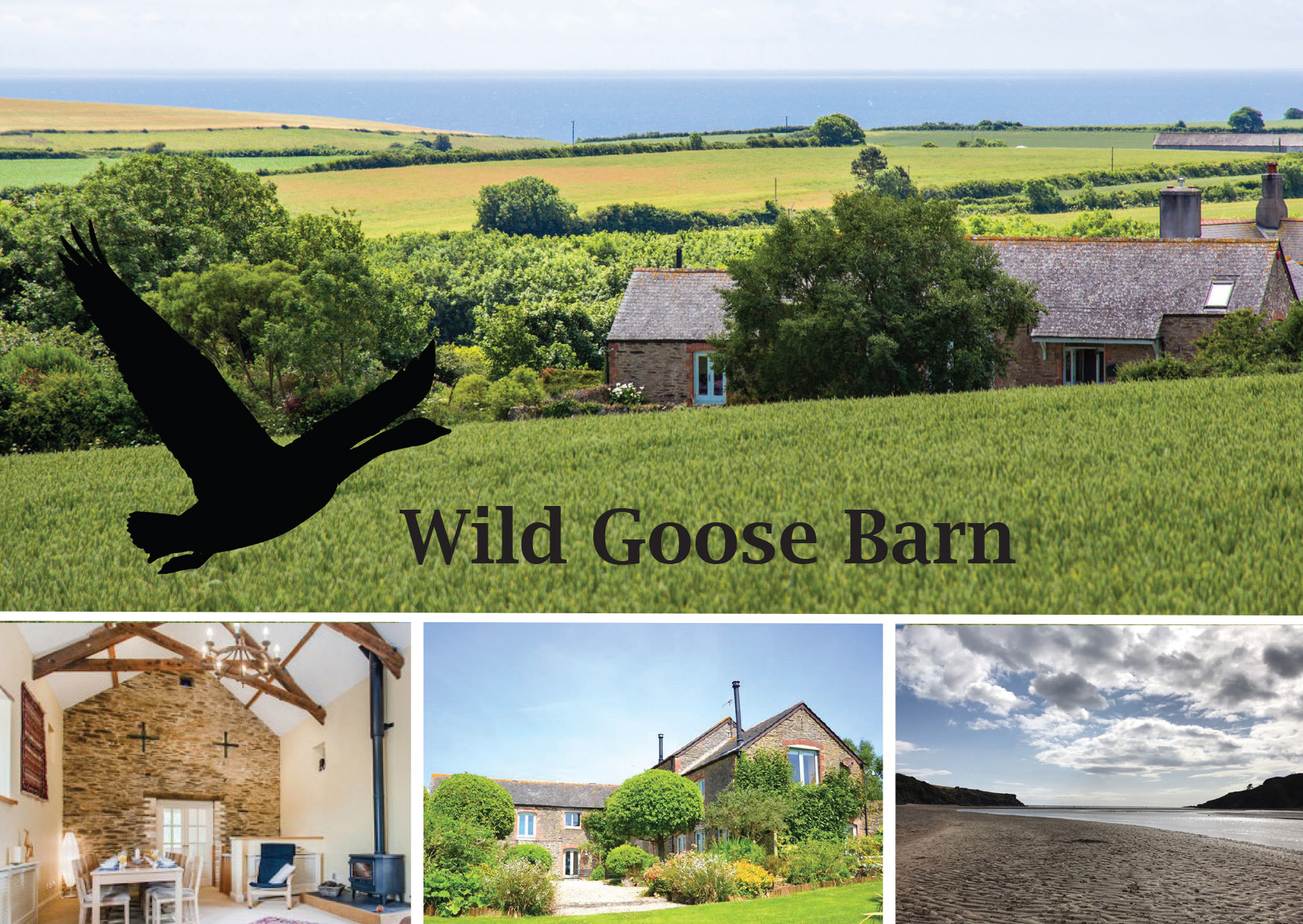
This Spring after a long search we bought a new home in Devon. It’s not a new house, but it’s new to us. It isn’t even a house really – it’s a barn. After several weeks of trailing back and forth and working on the garden and setting up the furnishings, we often referred to it as ‘the Barn’ and we could have simply called it that. But we wanted to invest a little more of ourselves, our hopes, dreams and history into this home, which we hope will be a place to welcome friends and family and even strangers.

We had several evenings of brainstorming names and batting them around for views from the family. ‘Farmer’s Den’ was ruled out early on and so were many popular ‘seaview’ options. After all it is a barn so we decided that should be in the name. We talked about our dreams and what was at the heart of all the journeys we’ve been on so far as a couple and as a family. We love wild places and wild activities, we like space and freedom and we love God. When the name was first mentioned it was so obvious, we knew it was right. Wild Goose Barn was chosen.

Why Wild Goose Barn? Here’s a bit of thinking behind the name, with thanks to a diligent researcher Simon Farmer.

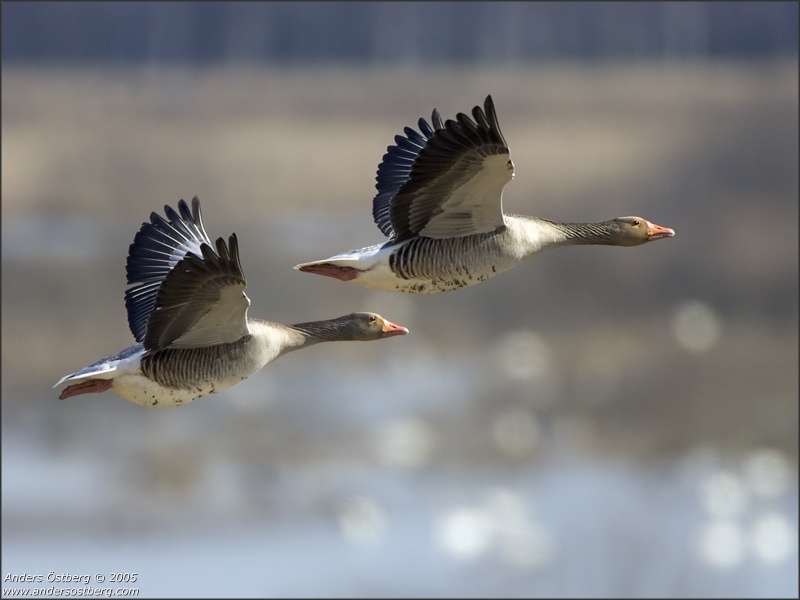
Wild geese are inspiring birds. They can live to 30 years or more. They travel huge distances in migration and are often seen in ‘V’ formation. Geese are flocking birds reflecting a sense of community. This is something we’ve been enjoying in this special part of Devon with the local village, the church and the friendship in the Dolphin Inn. It was here we met a friendly agricultural engineer who came to help us with our ageing mower, while others passed on tips about the best wild swimming spots and generally made us feel at home.

When a Goose flies, its wings create ‘uplift’ for the bird following. By flying in a ‘V’ formation the whole flock actually adds 71% greater flying range than if a bird was on its own. Whenever a Goose falls out of formation it suddenly feels the drag and resistance of trying to fly alone and so quickly gets back into formation to take advantage of the lifting power of the Goose immediately in front. When the lead Goose gets tired it rotates back into the formation and another Goose flies at the point position. Finally, while geese fly in formation they make quite a noise sometimes as they honk from behind. This isn’t just a random noise but these sounds are their way of encouraging those up front to keep going and keep up their speed.

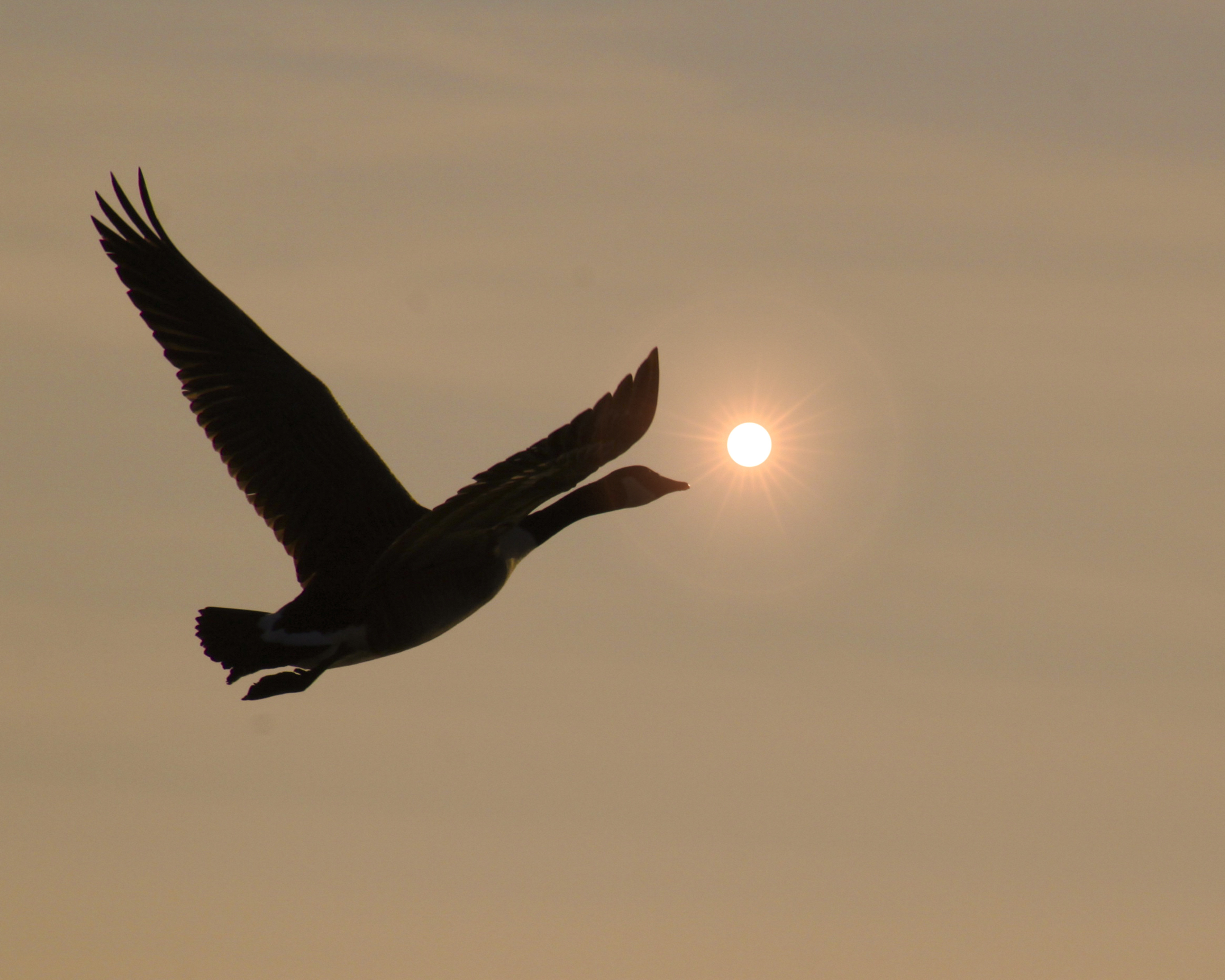
Devon has wild geese passing through and shortly after choosing the name we spotted a flock of geese flying in formation one evening. We watched as they changed course and flew directly overhead to continue their journey towards the sea into the setting sun. It was almost as if they were giving us a fly past of approval.

In the old days domesticated geese would have been kept around the barn. The Greylag is the ancestor of most domesticated geese. It is the largest and bulkiest of the wild geese native to UK and Europe.
‘Greylag’ either means “grey-legged” or “grey-laggard”, that is late, last or slow to migrate, or in other words, a loiterer or as we like to think just plain ‘laid back’.

Living near the sea, we’ve become accustomed to a deep sense of rhythm, especially the daily ebb and flow of the tide. And in the surrounding countryside the changing seasons are a part of life too, as farmers plough the fields, scatter seeds and gather the harvest. Migrating birds, nesting swallows all lead to this same sense of rhythm.

The Wild Goose is a symbol going back to Celtic times. In 500 AD the Celts developed a strong sense of spiritual rhythm living by the sea in places like Lindisfarne on Holy Island in Northumberland, Iona in the western isles of Scotland, parts of Wales, Ireland and the South West. And it was here in Iona and then Lindisfarne that Christianity first came to the British Isles. The Wild Goose in Celtic Christianity is traditionally aligned to the Holy Spirit although it can’t actually be proved. It is said, “The wind blows wherever it pleases. You hear its sound but you cannot tell where it comes from or where it is going. So it is with everyone born of the Spirit.” (John 3: 8). In Celtic tradition unlike the dove of peace, the wild goose fired up the mind and soul with song and dance and reveries of beauty. The Wild Goose is all about a spirit of adventure.

We hope Wild Goose Barn will live up to its name and be a place for coming together while offering a base for exploration and adventure. We’d like everyone who stays to receive a renewal of inner strength or ‘uplift’ as they gather with friends and family for adventures along our beautiful wild coastline.
To find out more or if you want to book a stay click here.

that sinking feeling

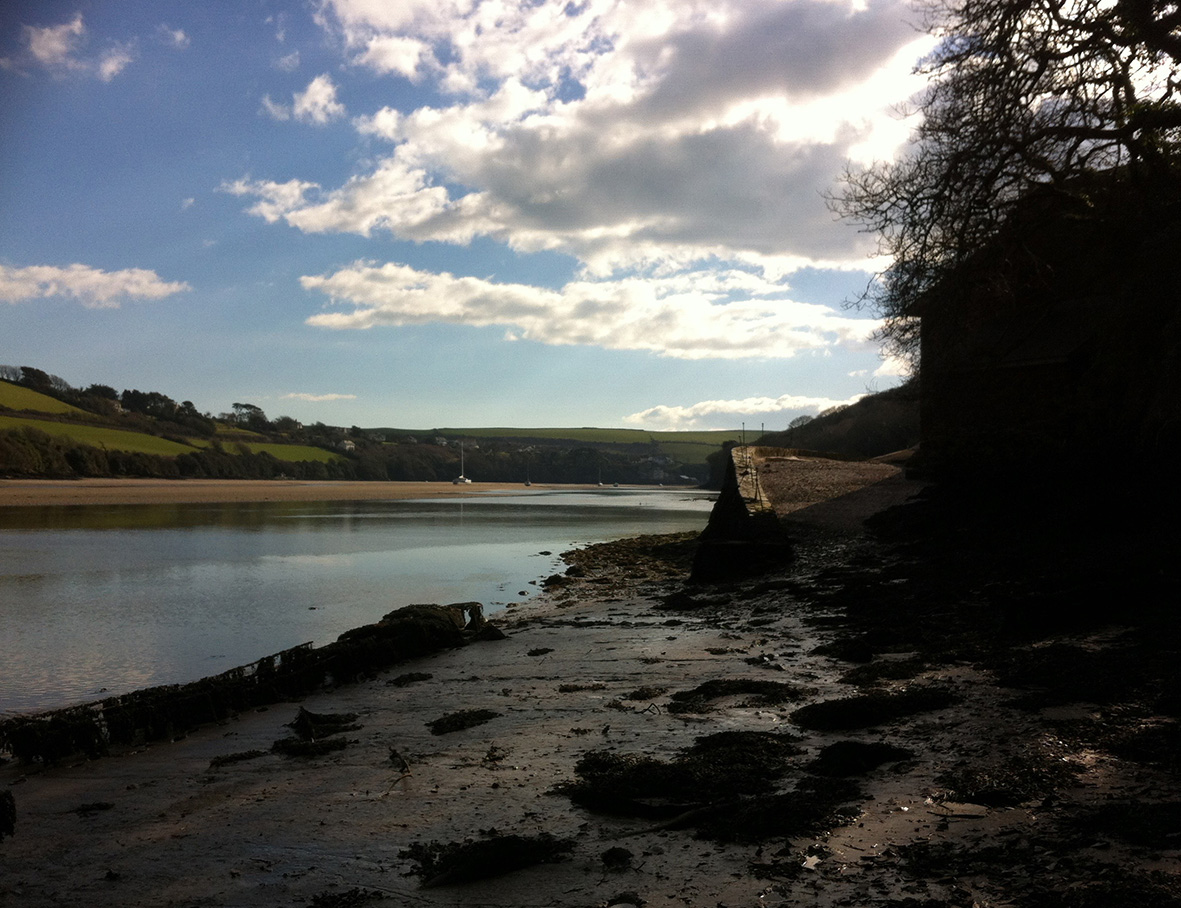
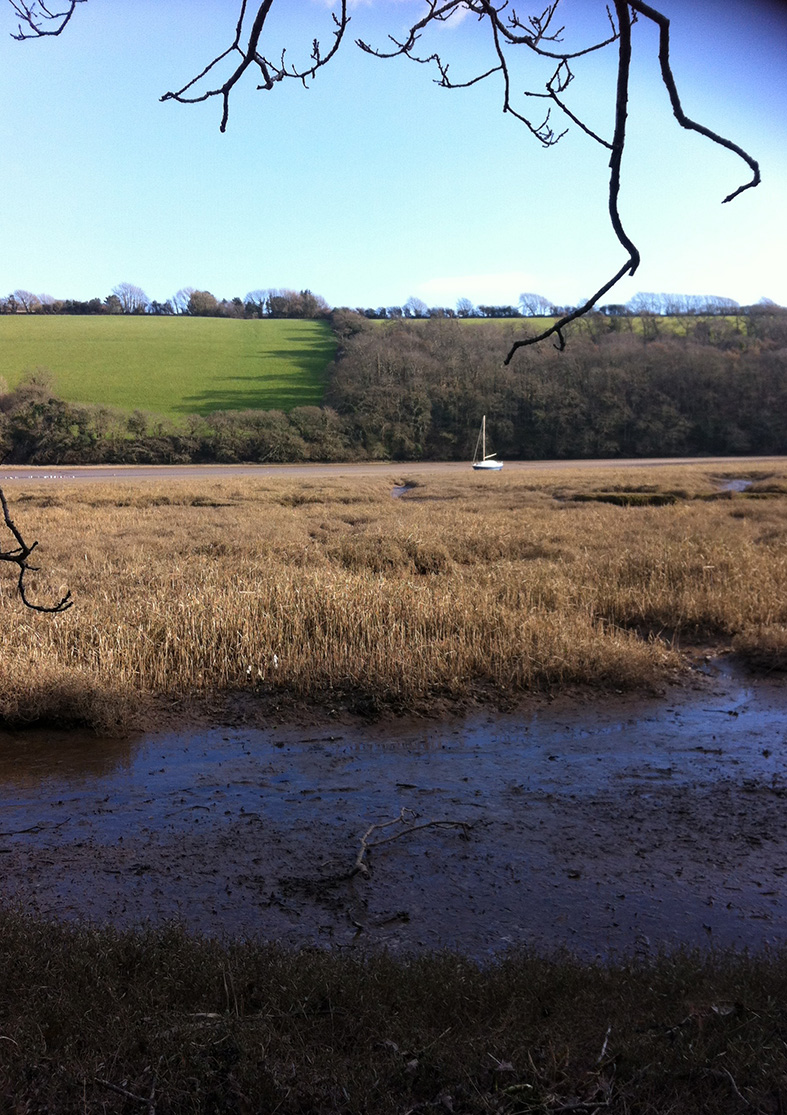
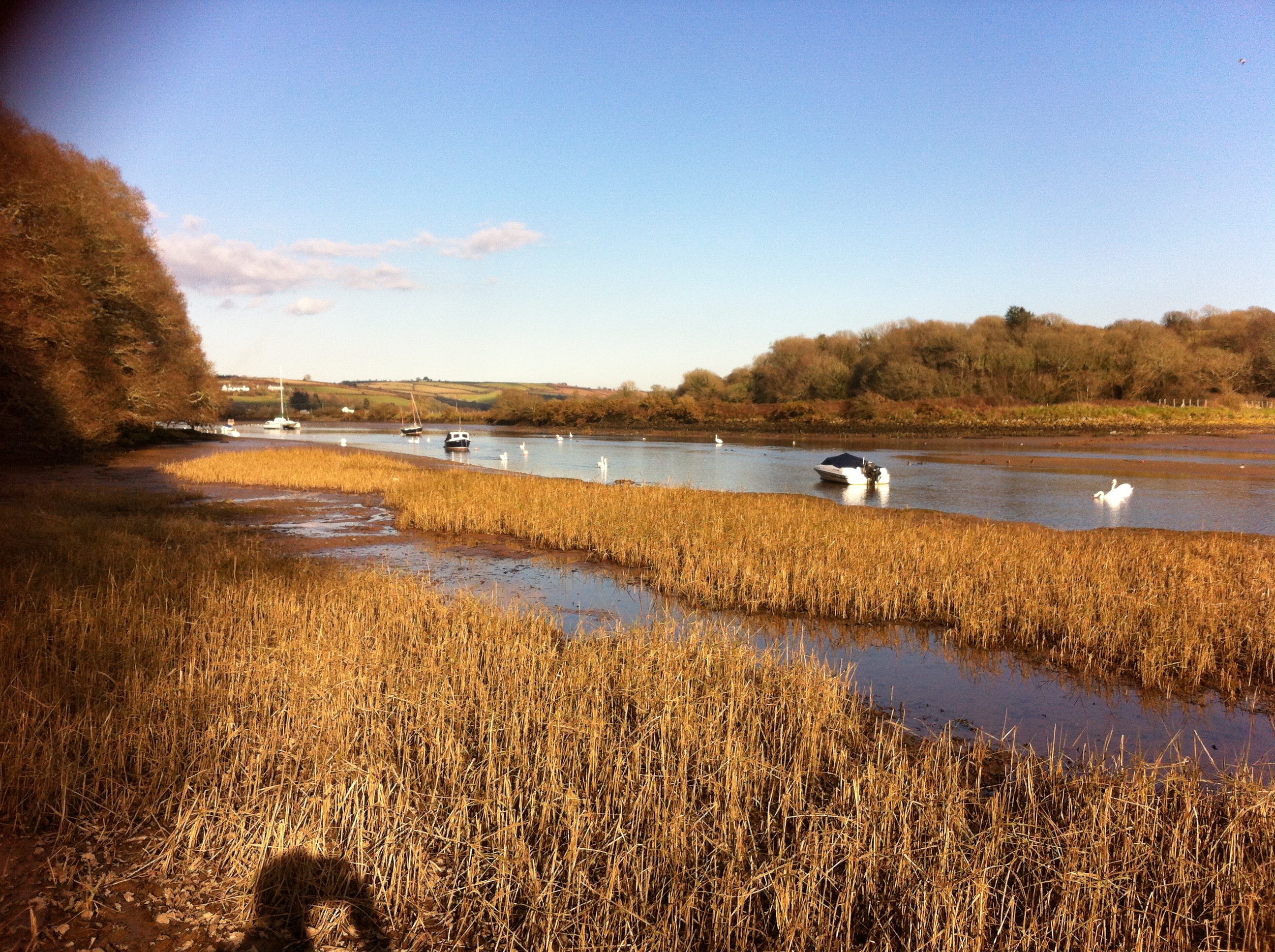
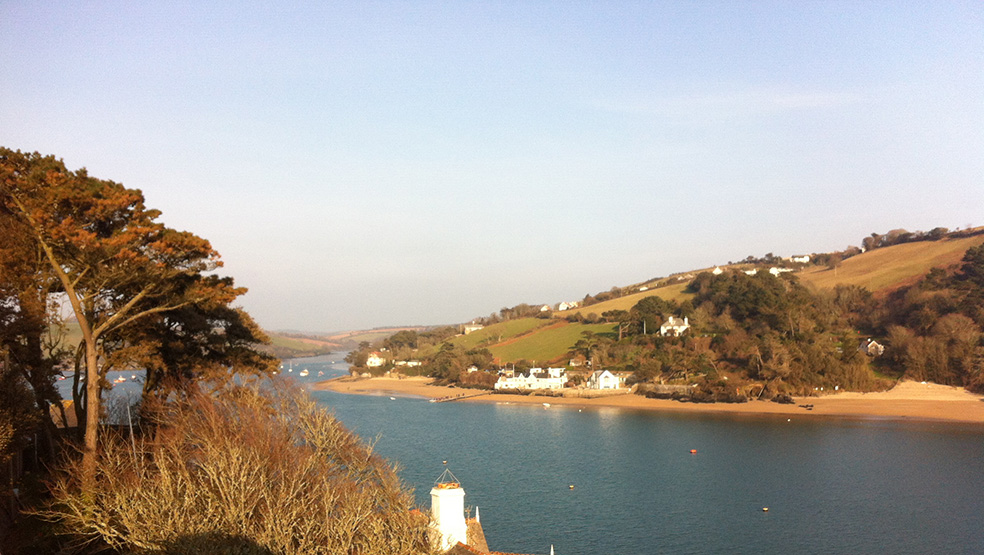
Devon has been seeping into my soul this week. Its hazy afternoon horizons, skeletons of trees lining hilltops and rocky coves where cliff outcrops rise out of ice blue water have been reeling me in. I’ve watched the tide licking its way up estuaries and curling its tongue around bobbing boats and buoys. The painfully narrow lanes have become less threatening, switch backing through rolling hills, as cars and buses breathe in and kiss wing mirrors to squeeze past. Pretty painted houses line the sides of steep estuary banks like stacked dominoes staring down at themselves in silver water snaking through the valleys. This land of white washed cottages, beam-laden pubs with log fires, sailing boats and fishermen is pulsating with stories and intrigue.

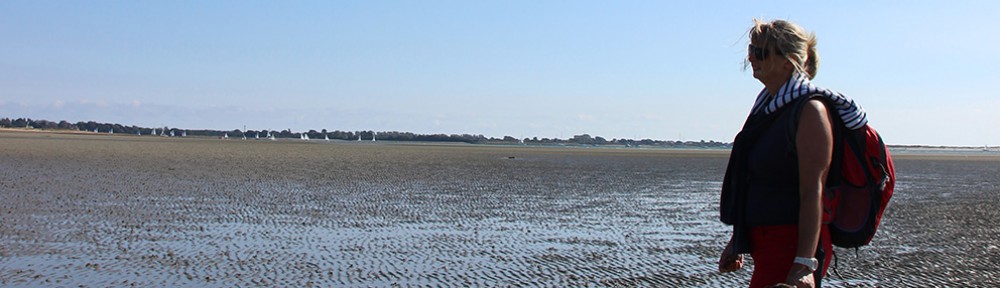
A few days ago, lunch and water carefully packed, we set off along one of these mesmerizing estuaries as the tide ebbed out. When we reached the sea an ancient smugglers’ pub provided liquid refreshment on a rocky island just offshore, reached only at low tide. I checked out the barman for eye patches and parrots – the tell tale sign of a pirate or a smuggler. He seemed fairly law abiding and even provided free blue plasters for customers with sore feet – a bit soft for a smuggler perhaps. As we’d diligently followed a footpath across fields on the first leg of the journey, we decided to make up our own route on the way back and follow the curving river inland. How hard could it be with the tide out?

IMG_2420

Gradually rock and sand gave way to mud and fallen trees. OK so far. The banks began to turn steep and the mud became stickier. “Stay close to the rock,” was the instruction passed back – apparently this mud was less ‘sinky’. Some time later we had gone a long way, too far to turn back if the mud became impassable. There were fallen trees to clamber over and it became a case of picking a route on solid ground wherever possible. Curves in the river threw up new challenges as we had to navigate streams and more sinking sand and mud. So far we’d made it and surely it couldn’t be much further? A particularly substantial barrier of fallen trees and undergrowth blocked our path and although we tried to follow a line of firm-looking sand, we soon began to sink and had to head back to the bank and battle through the trees to make progress. By now we were convinced we had passed the worst of the sinking mud, so we crossed a narrow stream onto a line of solid sand, striding confidently onwards. Gradually I noticed the stream between us and the bank was widening and the sandbank felt more like the middle of the river. It was time to cross back to the safety of the bank because the tide had now turned and gullies of water were filling up. I had visions of being up to my knees in mud waiting for the air sea rescue helicopter. But before I knew it I was on my own and the lead member of the party was safe on the stones at the edge, urging me to run and not stop until I reached solid ground. I took a deep breath and began running, pulling my boots and legs out of the squelching mud threatening to suck me down. Obviously, I made it. Just. Mud up to the knees of my lovely blue jeans and coating my walking boots, seemed a small price to pay for the walk up the river and along the tidal road… but never again. I won’t be trusting Devon’s river estuaries, which look like sand, but turn into sinking mud.

IMG_2423IMG_2424

I realized it was a very near miss, when a few days later we witnessed a full RNLI rescue of a dog up to its neck in the mud on the edge of another estuary. When he was eventually carried out exhausted and mud drenched by several firemen and RNLI rescue crew everyone breathed a sigh of relief and I thought… it could have been me!

IMG_2441

sea addict

I have to confess. I’m addicted. I can’t go a day without it and I’m afraid I may get a little shaky if I don’t see it. I didn’t realise it could be so addictive or I’d have been a bit more careful. Photographs don’t do it justice – they don’t capture the smells and sounds that make it such a wonderful ‘drug’.

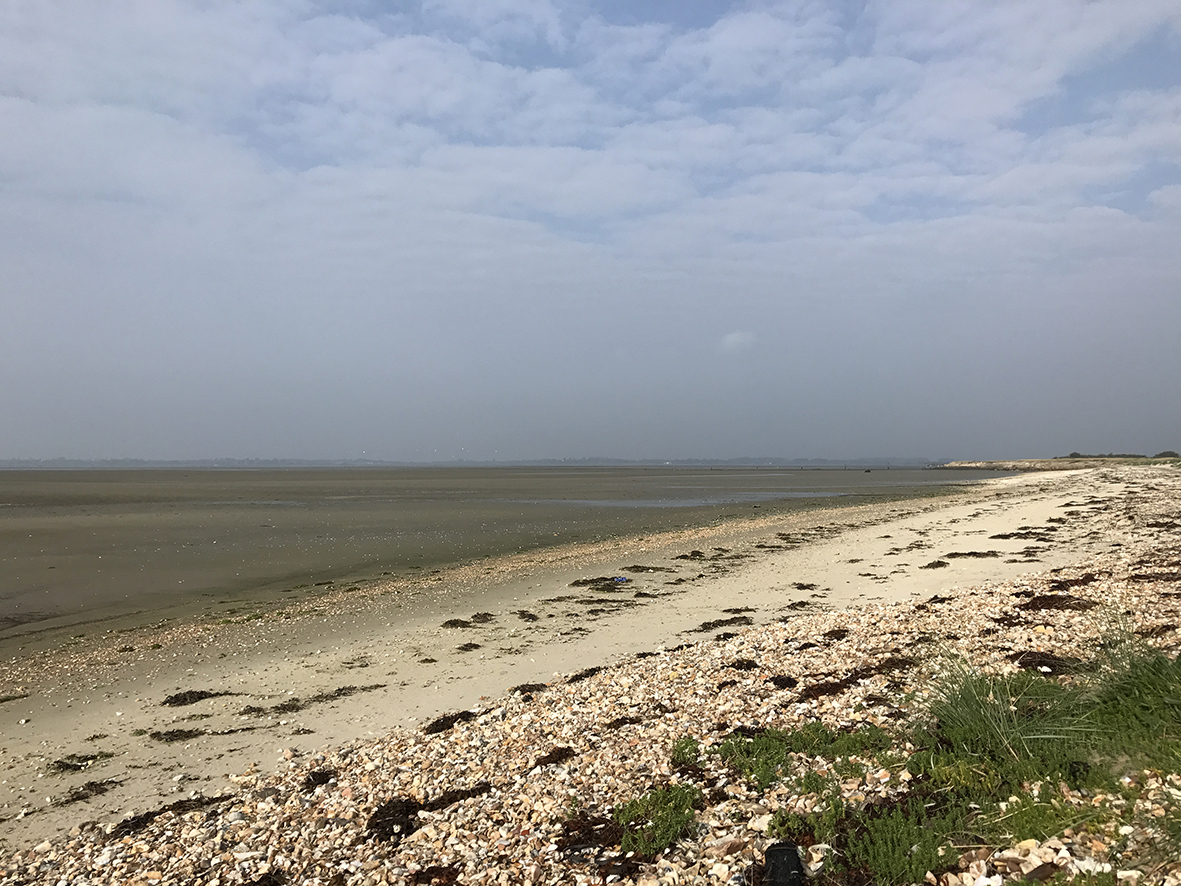
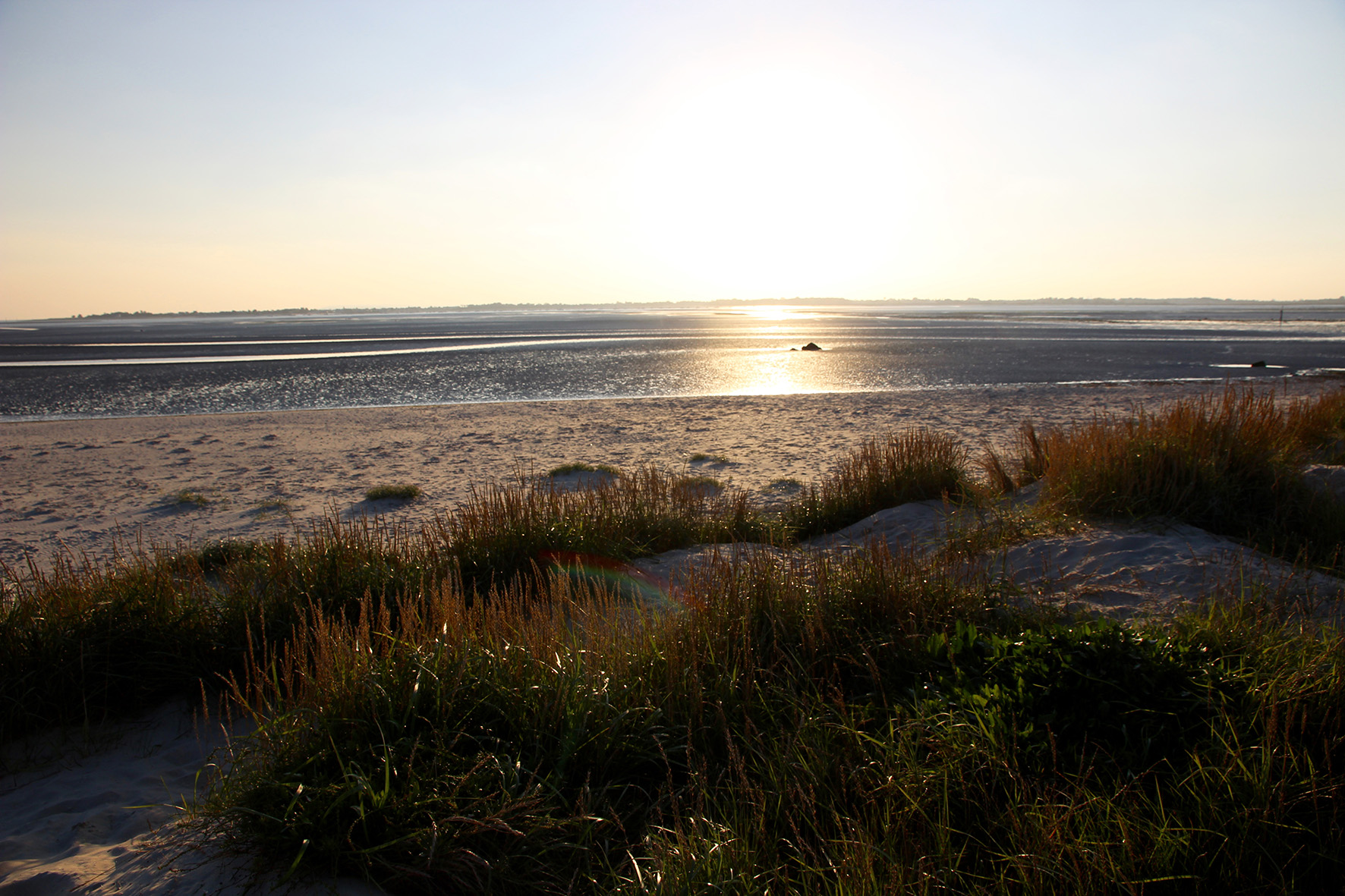
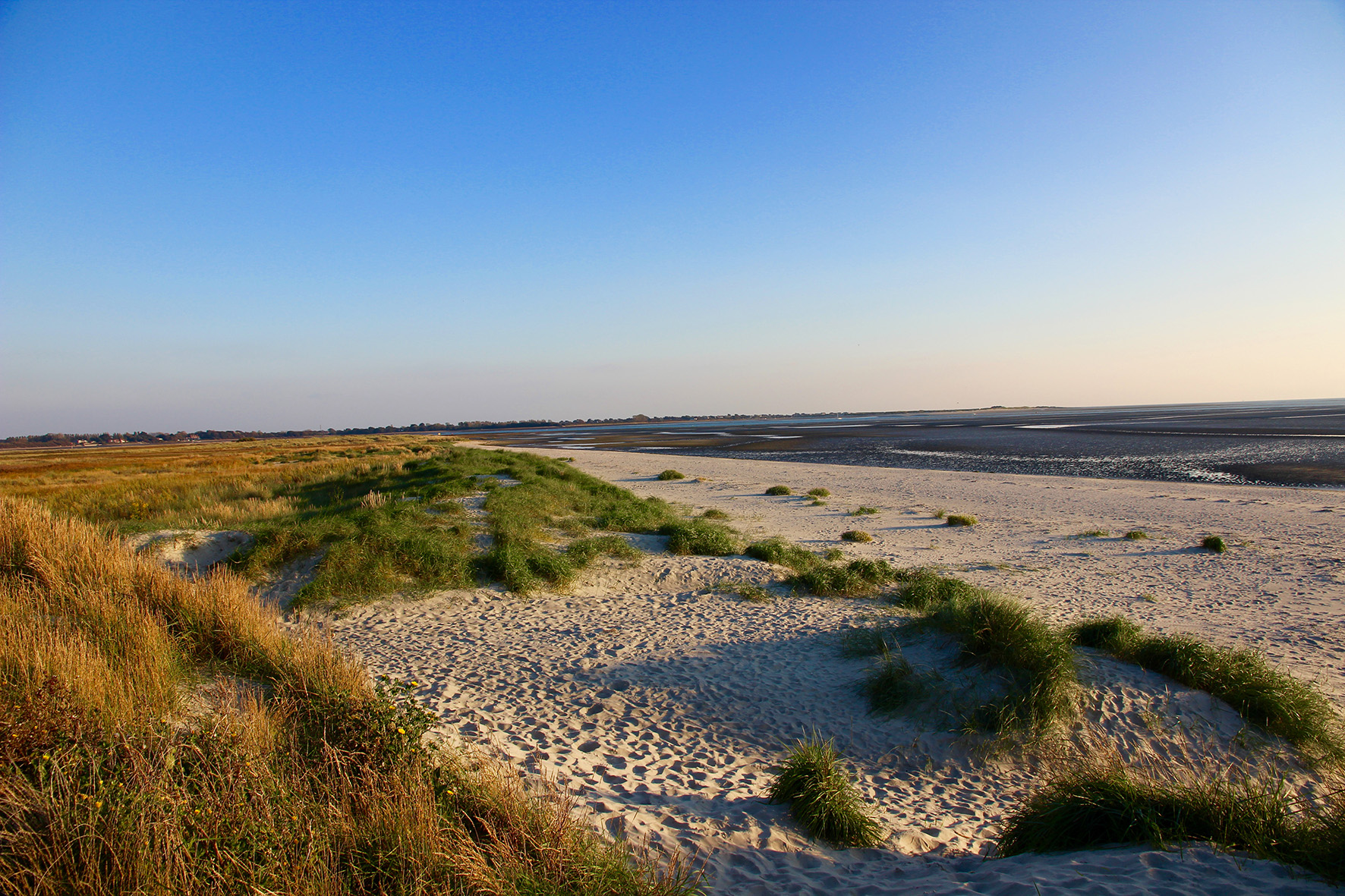
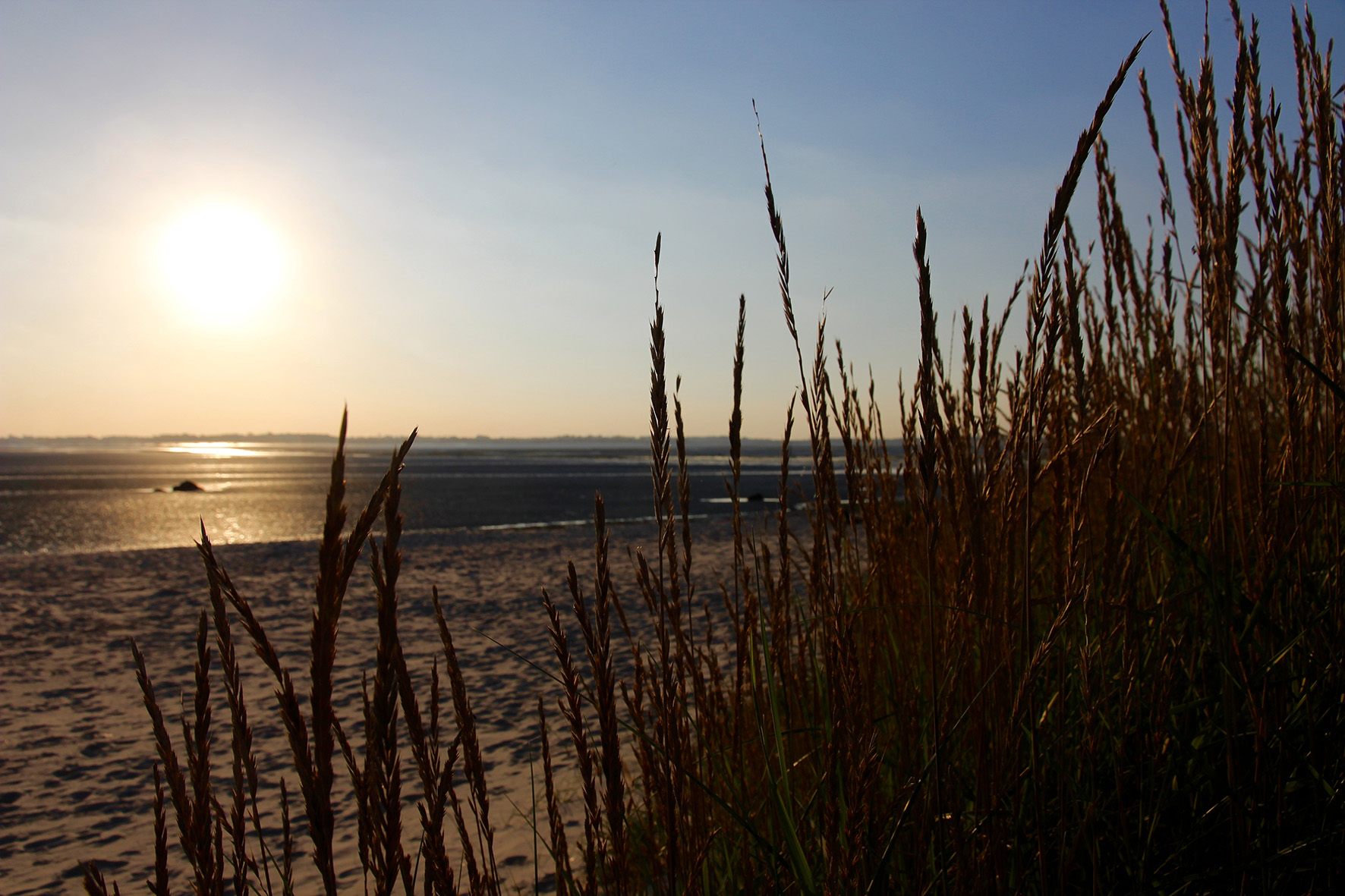
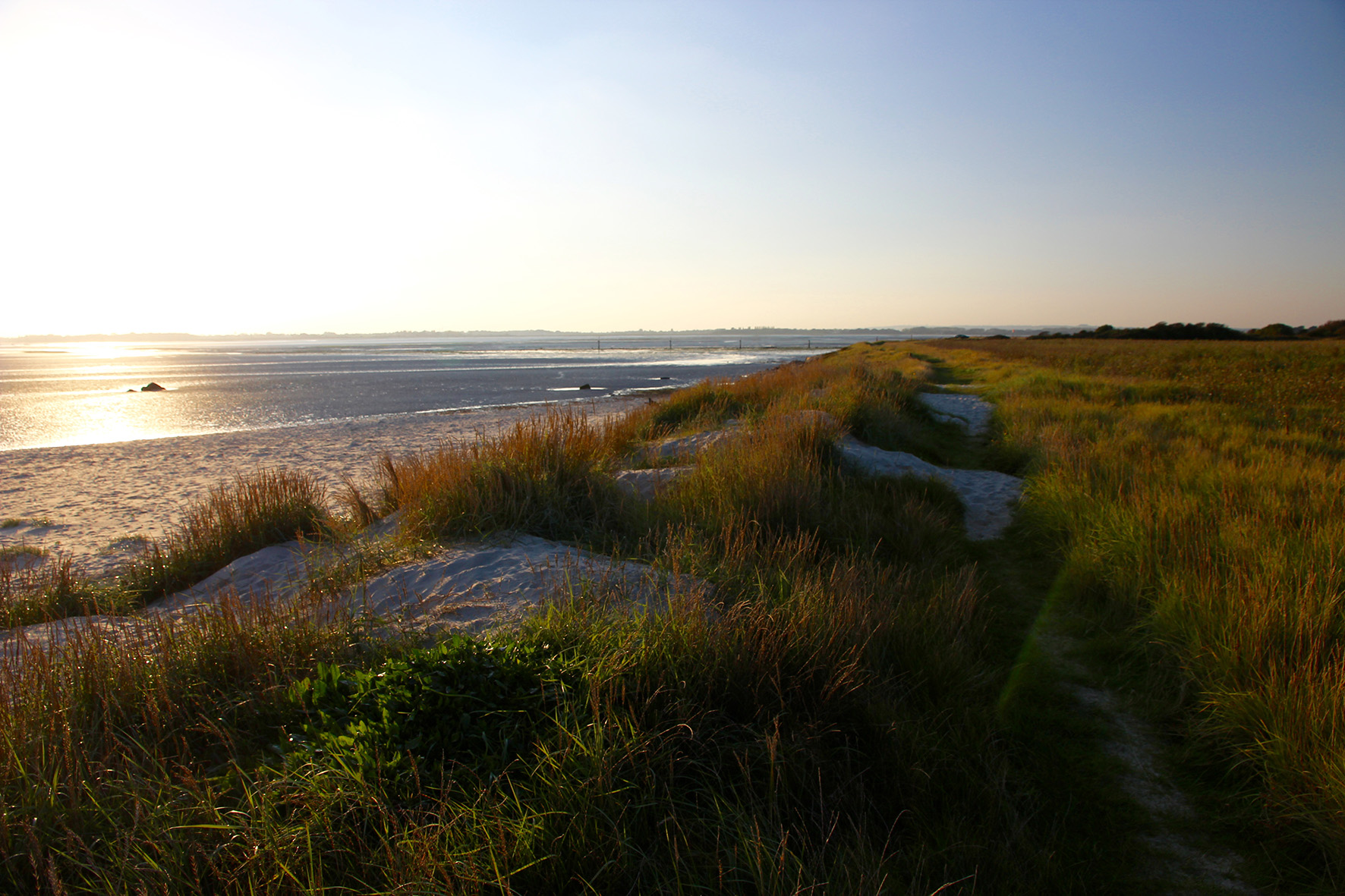
I never imagined moving to live beside the sea would be so delicious and leave me craving for a sight of it every day. This afternoon I ‘ran’ to the beach (not the kind of running you do when being chased by hungry lions – just the kind that keeps pace with a slow cyclist). I knew it was going to be beautiful when I noticed golden blades of grass casting sharp shadows on the sand in the dunes. A bright white sun was starting to slide towards the horizon across the channel lighting up the ripples in the muddy coloured sand as the rays danced across the water. There were shallow dark pools on the wide expanse of empty beach. In the distance a solitary sailing boat bobbed mid channel and high up in the distance a flock of migrating birds swooped and swirled in a cloud, before disappearing out to sea.

IMG_4243

This is a special place. The only sounds were some strange sea bird noises and what I think might have been baying seals on the sandbanks. This afternoon it was as quiet as a nature reserve. I had the beach to myself. The light was unreal in a golden ethereal way. It felt like it was going to be the kind of night for smugglers to pull up their boats and haul their contraband up the beach…the kind of night for stories and secrets to be shared around a fire on the cool sand while the waves creep closer.

IMG_4244IMG_4231

I’m not sure how or why I’ve developed this addiction to ‘see the sea’ over the past few weeks. I could also describe it as a love affair because no matter what the state of the water – dark and stormy, grey and choppy or calm and blue – I can’t help but love the view. I even love it when the tide is out and messy dark green sea plants are left exposed, with the channel a remote blue strip beneath the boats. There is a reassuring rhythm to the tides. I’ve been waking up trying to remember what state the tide will be at – we can’t go far around here without noticing if it’s in or out. Now we’ve stuck a tide chart up in the kitchen and most days someone checks out the tide times and heights.

The sea here gives me a sense of space and freedom as its wide-open skies wrap around the island. It’s a sea of possibilities. A reminder that there are so many stories out there as people set sail or launch into open water – a lone fisherman inspecting his nets, an anxious sailor battling against a retreating tide, or a man on a motorboat heading into the deep. It’s a place of inspiration too. There are mysteries here to unravel and stories to be told… even crimes to be solved. I’m going to indulge my addiction for now. After all it’s not expensive or unhealthy and I have a suspicion the sea has something to tell me. And most of all – we live here…

IMG_4229IMG_4241

in search of treasure

I love treasure hunts and this past week I’ve been introduced to an alternative sort of pursuit. In fact I’m not sure it is really treasure hunting at all, but it did involve clues, searching and finding things or sometimes not finding things.
We have prided ourselves in knowing quite a few of the major ‘must see’ visitor spots round and about and also some of the hidden gems, but suddenly last Saturday afternoon we found ourselves guided to places we had never been to before by my visiting sister-in-law and an iPhone app. At first this was a case of making unplanned detours on our journey to hunt out special locations which led us to an area called ‘ground zero’. First stop we found ourselves in a children’s park by an ancient medieval church. While some were intent on a hunt for a hidden canister, I wandered over to the pretty stone building and drew back the heavy bolt on the ancient wooden doors and stepped inside. It was lit by a soft glow of candlelight from small tea lights on a rough table with bowls of charcoal and bottles of incense and oil piled around in a homely state of untidiness. In front of the pale stone walls there were easels and tables scattered around with gilt framed icons, while some paintings were fixed on the walls. Further in I noticed ancient crumbling frescoes in blues, greens and reds still visible on the walls. In a darker area of the church, not penetrated by the candlelight, a pair of frescoes were just visible through the gloom. We all spent time peering at the worn paintings and images, captivated by this little ‘jewel’ on our doorstep. It was a fascinating little church and it is only about a mile or so from our house, but we probably wouldn’t have gone there without the ‘treasure hunt’.

The next day we ventured into our favourite walled city for a ‘frappe’ and a wander and here too were new discoveries. Following the arrows on the iPhone we climbed the mountain of steps without a hand rail to the top of the ancient Venetian-built walls. Here they were as wide as two cars parked end to end, and at the far corner there were views across the city and out to sea. It was beautiful and there also happened to be another hidden cache somewhere up there amongst the gaps in the walls.
church 3 church 2
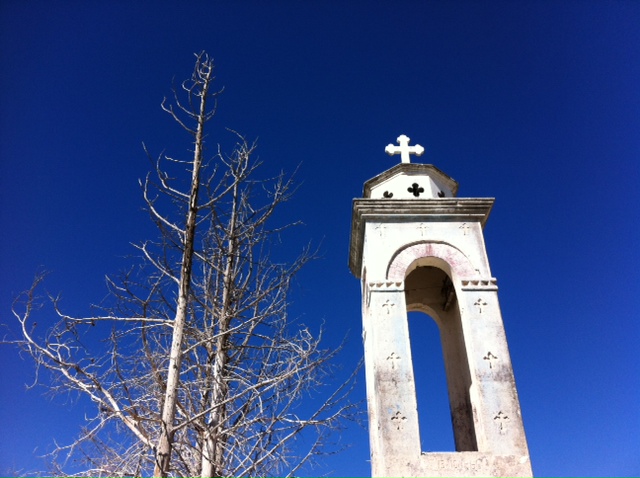
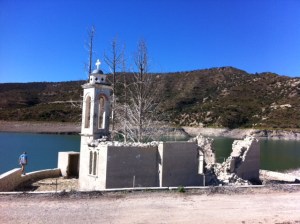
Other searches involved looking underneath medieval canons and picnic tables, peering below low hanging branches and just generally scanning locations for clever hiding places. It’s probably obvious to some of you that I’ve been learning about ‘Geocaching’…it’s been fun and frustrating at the same time. I’ve enjoyed the way it’s taken us off the beaten track to a sunken church on the edge of a reservoir and remote paths to surprising viewpoints. But I’m slightly disappointed by the ‘treasure’ at the end of the hunt. At the very least I was hoping for a message in the hidden cache pots.

We found a message in a bottle once. We were on an island at the time and it was very exciting when we first spotted it bobbing near the shore. We waded out into the water to rescue it very intrigued about what might be inside and what secrets it would reveal…when we fished it out we saw there was a message inside. I thought it must be from a shipwrecked sailor and was all set to dial 999, but in fact it was a bit dull….so dull I can’t remember what it said, except that no one was in danger and I think someone had just thrown it in the sea to see if anyone would pick it up. We scrawled our own message and threw it back in the water further round the coast and tried to make the message slightly more dynamic.

Geocaching is a bit like this unsatisfactory experience…there are no mysterious messages to solve once you find the little box or container, you simply sign the paper inside and move on. The biggest excitement is finding a ‘travel bug’ which is a trinket that can travel round from cache to cache, so you don’t even get to keep it! Rather like a lot of things in life – the hunt was more exciting than the end result. Now if geocaches contained clues or maps to a small pot of gold or hidden jewels I could get into it… and then it really would be treasure hunting.

steal or salvage?

Can you steal from the sea? This moral dilemma has been troubling me for a couple of nights…as I hunt around for a corner of the sheet in the middle of the night. These fresher September nights are a refreshing change from the routine of tip toeing out to the water cooler in desperate need of a fresh breeze. So I have been a little troubled about the legalities of sea salvage and what’s allowed. It all began with a ‘run of the mill’ trip to the nearest beach…

We have been out to the same little bay on a number of afternoons, but each time with a different set of visitors. The last few weeks have involved a never-ending stream of ‘hellos’ and ‘goodbyes’ – some sad as we wave goodbye to loved ones for several months and others bringing a smile as familiar faces appear through the arrivals door. It’s a little weird to keep driving to the airport so often but never actually boarding a plane. On departure for her flight, our daughter commented: “It’s odd you’re staying here,” and I’m still getting used to that fact.

Back at the beach, as we bumped along the cliff track to the secluded bay, we could all drink in the deep blue and turquoise scene on our left, where dark black rocks and yellow sandy cliffs curled their arms around the clear water. We’ve named this bay, Sea Carrot Bay, on account of someone finding what was believed to be a ‘sea carrot’ on the sea bed a few weeks ago (please don’t tell me you’ve never seen a sea carrot!). Bags, snorkels, beach mats in hand we eased ourselves carefully down the winding steps to the beach below, mastering the knack of feet slipping from flip-flops on the sand coated steps. At the beach some tried out snorkelling for the first time, others just put on flippers, while the expert son No. 2 just wore goggles! This particular bay affords a view of the crumbling old hotels and buildings lining the beach of Famagusta. Between the gaps in various jagged rocks forming archways and strange ‘windows’, the multi-storey blocks are visible like mini painted scenes on the horizon of the bright blue water. While we were floating around, some peering down at the fish and rocks below, a strange piece of wood was spotted on the seabed by the eagle-eyed Major and son No 2. promptly dived down to investigate. Earlier I’d seen him lift up a concrete weight with a rope tied to it. I was impressed, but then realised everything weighs less underwater and it wasn’t just the gym sessions taking effect. So, the piece of wood was brought to near the surface after a bit of panting and heaving and the salvage operation of swimming it to shore began. On asking, “why are you carrying a really heavy piece of wood to the beach?” The answer was: “Treasure!” Too many Pirate films had them thinking this was part of a wrecked ship. The huge beam was lifted onto a rock by the beach for further examination and looked like…a piece of battered brown wood, with some holes and bolts, slightly curved, with lots of sea creatures attached to it. And it smelt of fish. So I was a bit perturbed that they announced it was going home with us. There was no hidden key or map or even a hint of treasure hidden within.

“But it belongs at the bottom of the sea,” I protested…”and what are we going to do with it?” Apparently it would go in the garden. The question of who it belonged to, didn’t seem to be an issue. So two strapping lads were tasked with lugging the beam, or piece of ship’s hull, up the winding cliff steps and then it was manoeuvred into the car, with passengers dispatched to the other vehicle to make room for the salvage. The smell behind my left ear on the journey home wasn’t pleasant and I was glad to get out of the car when we got home.

Yesterday I went for a swim and noticed a kind of fishy-sea smell as I headed up one end of the pool. Glancing up I saw the gnarled-shipwreck-like beam of blackened wood staring down at me. Thank you guys for the authentic decoration on the edge of the pool – we won’t be taking this back to the UK with us, but we now have a little bit of history and something from the sea bed at Sea Carrot Bay in the garden. I’m a bit hazy about the laws of salvage and realise raids from customs officers are always a possibility – but I have planned my excuse. ‘Didn’t you know this area of Cyprus was once under the sea and this ancient scrap of wreck must have been left behind?’. One day it’s presence here will puzzle archeologists, because who would dream that a family would drag it from the sea and drive it home several miles as a trophy or even a garden ornament?